
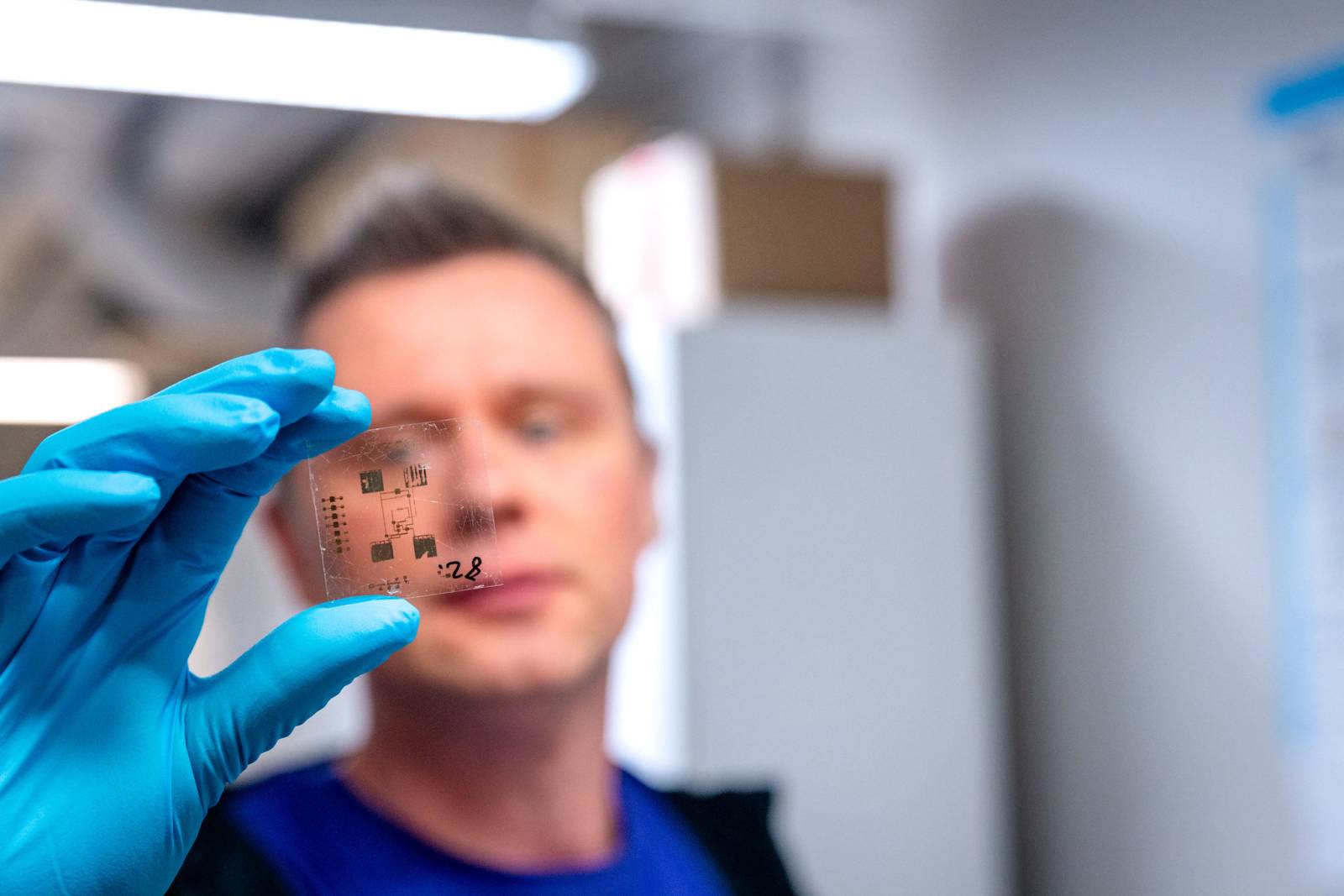
The ROPALD project (Utilization of high-resolution printing and low-temperature laser-assisted ALD for sustainable large-area electronics) has been awarded Proof of Concept funding by the Research Council of Finland.
Led by Professor Matti Mäntysalo, in collaboration with Dr. Jaakko Leppäniemi, Tampere University, and VTT, the project develops new, environmentally friendly manufacturing methods for large-area electronics. It combines high-resolution printing, photolithography-free zinc oxide transistor fabrication, and a novel low-temperature laser-assisted thin-film deposition technique.
The goal is to enable lightweight, low-cost, and potentially biodegradable electronic solutions for applications such as RFID/NFC, flexible displays, environmental sensors, and medical diagnostics.
By bridging research and industry, ROPALD aims to accelerate the commercialization of sustainable electronics technologies and strengthen Finland’s position in the field of green electronics manufacturing.
Research Council of Finland selects projects to promote research utilisation
The RCF Proof of Concept scheme supports research projects in taking their ideas towards commercialisation and generating other societal impact. The funding encourages researchers to, for example, test their research results in practical settings or develop new approaches to address the needs of industry, public administration or the third sector. The RCF monitors the impact of the research projects.
The 2025 Proof of Concept call was implemented with additional R&D appropriations allocated by the Finnish Government. In addition to Academy Project funding, many applicants had produced their research results with Academy Research Fellowship funding or funding from the Strategic Research Council (SRC). Applications were received from a wide range of scientific disciplines.
The RCF Subcommittee for Research Utilisation, which made the funding decisions, considered the best applications to be highly innovative and of a high standard. They had clearly defined the research utilisation path, the potential of the ideas and the project’s objectives. The collaborators and stakeholders and user groups important to the impact of the project, as well as their roles in the project, were also well described. A total of 49 per cent of all applications earned an excellent rating, scoring 5 or 6 in the review. Only slightly more than half of the top-rated applications could be granted funding.