

Every day, we generate enormous amounts of data through our smartphones, digital services, online platforms, and interactions with technology. These data can reveal how people move through cities, access services, respond to environmental conditions, and experience their surroundings.
Such information could help researchers answer important questions about urban sustainability, public health, mobility, and social inequality. Yet much of it remains inaccessible to academic researchers.
Why is it that private technology companies can collect and analyse vast amounts of personal data, while researchers working to address societal challenges often face substantial barriers to accessing the same information?
This question is at the centre of a new article by Milad, a researcher at the Urban Physics Research Group.
Published on 14 October 2026 in the interdisciplinary journal Big Data & Society, the article, titled “Making corporate data accessible for public-interest research: A consent-based access mechanism,” examines how existing data governance arrangements can unintentionally restrict research intended to benefit society.
The problem: An unequal data landscape
Privacy regulations, including the European Union’s General Data Protection Regulation (GDPR), are essential for protecting individuals from the misuse of their personal information.
However, the paper argues that legal uncertainty, institutional caution, and restrictive corporate data-sharing practices can create an imbalance.
Large technology companies already possess the infrastructure to continuously collect and analyse enormous volumes of data through their services. Academic researchers, by contrast, generally cannot access comparable datasets, even when their research has a clear societal purpose and is subject to institutional ethical oversight.
The consequences extend far beyond universities.
For example, detailed mobility data could help researchers identify inequalities in access to public transport, understand how different population groups experience urban environments, or investigate how people respond to extreme weather conditions. Yet the necessary data may remain under corporate control or be made available only in highly aggregated forms.
This can limit the ability of researchers and policymakers to understand important differences between neighbourhoods, communities, and population groups.
A proposed solution: Institutional Research Use Only Consent
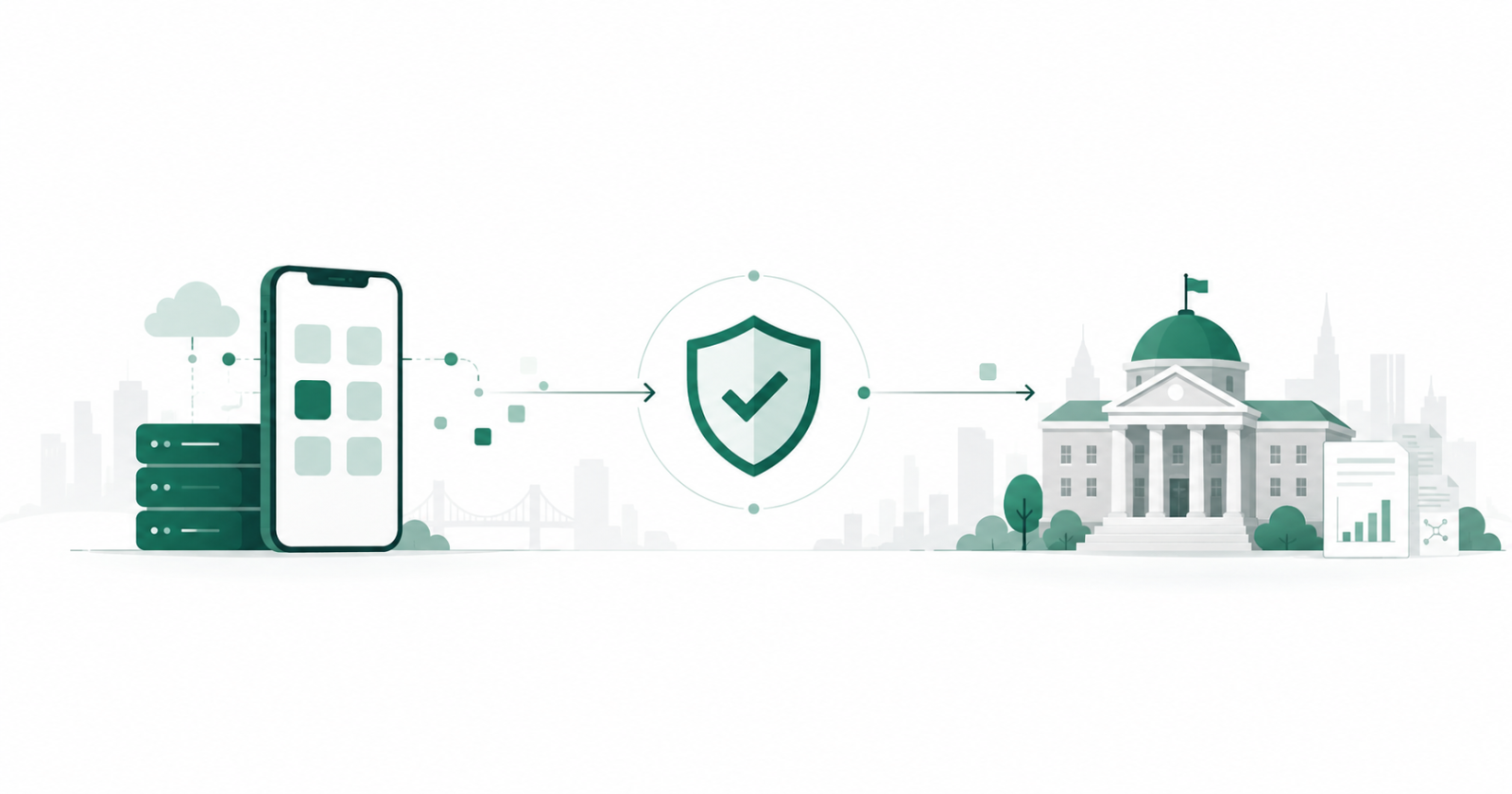
To address this challenge, the article introduces a proposed consent mechanism called Institutional Research Use Only.
The idea is to create a clear and voluntary pathway through which individuals could allow specified data held by technology companies to be shared with accredited research institutions for legitimate, non-commercial research.
Rather than providing unrestricted access to personal information, the proposed mechanism would operate under strict conditions, including:
- Voluntary and informed participation by individuals.
- Access restricted to eligible and accountable research institutions.
- Use of data exclusively for defined public-interest research purposes.
- Data minimisation, appropriate de-identification measures, and secure access controls.
- Auditable governance and restrictions against commercial exploitation of the shared data.
Importantly, the proposal does not call for weakening existing privacy protections. Instead, it seeks to make responsible data sharing more transparent, predictable, and practically achievable.
The article also discusses how such a mechanism could complement existing regulatory provisions, including the research data-access framework established under Article 40 of the European Union’s Digital Services Act.
The proposal is not yet an established legal mechanism. It is a suggested approach for policymakers, regulators, technology companies, and research institutions to consider.
Why this matters for urban research
For the Urban Physics Research Group, this discussion is particularly relevant.
Understanding how urban environments affect human health and well-being increasingly requires combining information about the physical city with information about how people use and experience it.
Environmental measurements, building simulations, geographic information systems, and population data already contribute to this understanding. More accessible, responsibly governed digital data could further support research on environmental exposure, sustainable mobility, climate adaptation, and urban inequalities.
At the same time, greater data availability must not come at the expense of individual privacy, especially when dealing with sensitive location and mobility information.
The challenge is not simply to make more data available, but to establish trustworthy ways of using data for the benefit of society.
This new publication contributes to that discussion by proposing a practical direction for more equitable and accountable data governance.
Towards data governance that serves the public good
As cities and societies become increasingly data-driven, questions about who controls information, who can access it, and for what purposes are becoming more important.
The article invites a broader discussion about how privacy regulation, corporate responsibility, and scientific research can work together rather than in opposition.
At Urban Physics, we are pleased to share this contribution to the growing discussion on responsible data use and look forward to further conversations on how better data governance can support research addressing real-world challenges.
Read the full open-access article:
Malekzadeh, M. (2026). Making corporate data accessible for public-interest research: A consent-based access mechanism. Big Data & Society, 13(4).