
Researchers at Tampere University, in collaboration with the University of Helsinki, have developed a novel far-red light-responsive drug delivery platform based on nanofibrillar cellulose. The work was recently published in Carbohydrate Polymers.
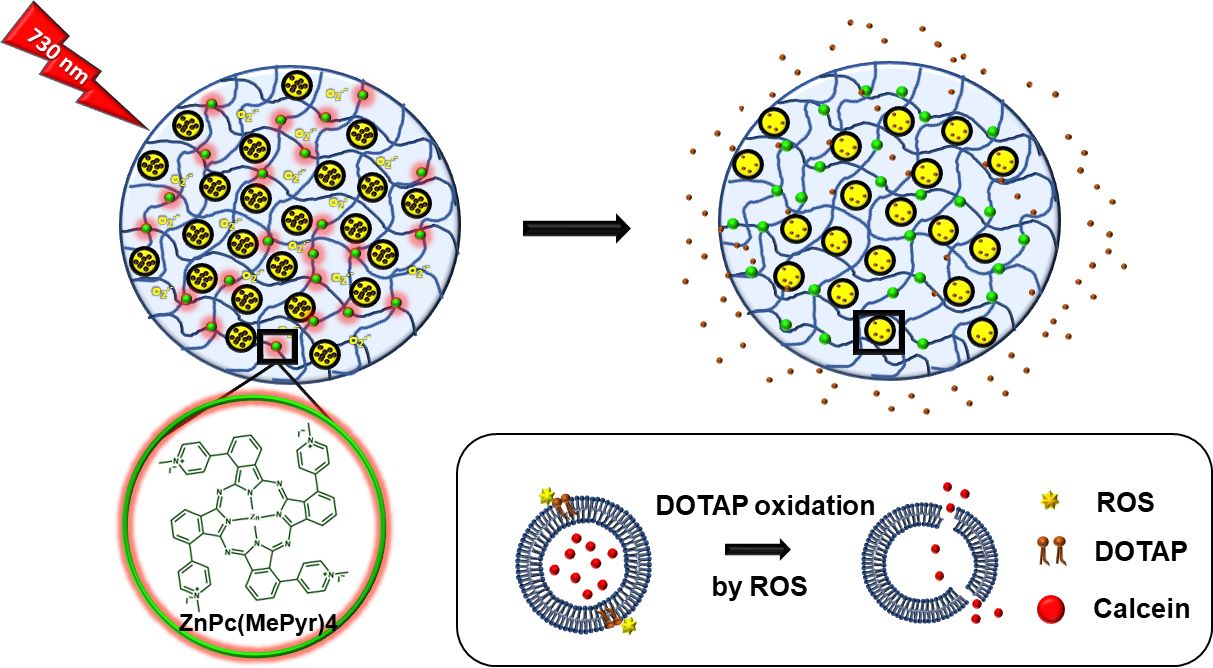
In this study, anionic nanofibrillar cellulose (ANFC) was used as a hydrogel platform to enable light-triggered cargo release from liposomes. Unlike conventional approaches, where photosensitizers are embedded directly within the liposomal membrane, the team introduced a cellulose-binding phthalocyanine derivative that strongly attaches to the cellulose matrix. This innovative design positions the photosensitizer outside the liposomes while both the sensitizer and cationic liposomes bind efficiently to the ANFC hydrogel, making the system simple and straightforward to fabricate.
Upon irradiation with far-red light (730 nm), the immobilized photosensitizer generates reactive oxygen species (ROS) within the hydrogel. These ROS oxidize unsaturated lipids in the liposomal membrane, increasing membrane permeability and enabling controlled, on-demand cargo release.
Using relatively low light doses, the system achieved approximately 70% release of the model hydrophilic compound calcein. Importantly, the strong response to 730 nm light allows deeper tissue penetration, making the platform particularly promising for biomedical applications.
This cellulose-immobilized photosensitizer–liposome system represents a versatile and externally controllable drug delivery approach with potential applications in light-activated coatings, wound dressings, and implantable therapeutic materials.
Read the full article here:
https://doi.org/10.1016/j.carbpol.2024.122134