
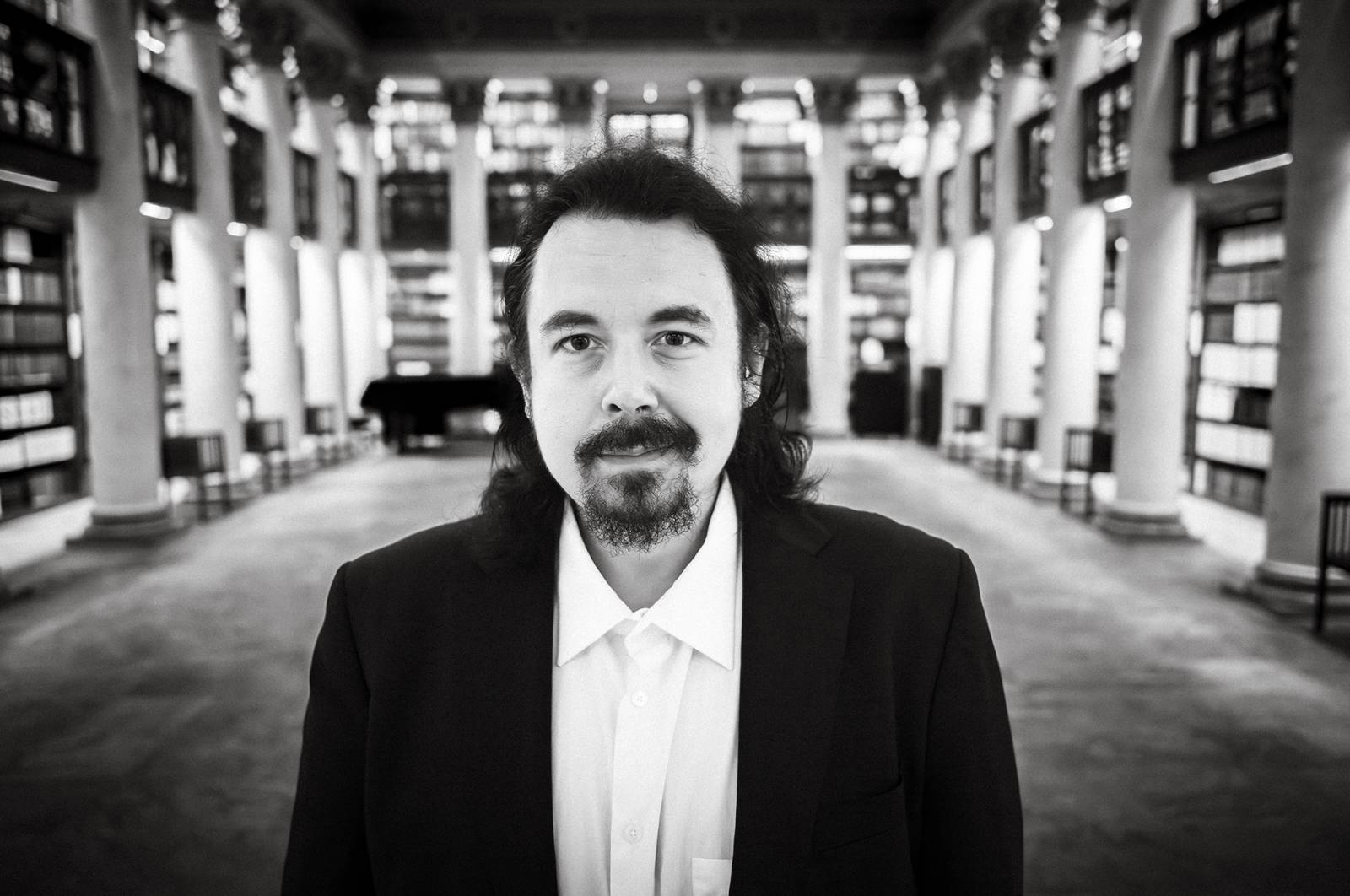
Public defence on Friday 7 November
The doctoral dissertation in the field of theatre and drama studies, titled “Early Modern Drama and the Rhetoric of Theatre: The English Renaissance Stage as Metatheatrical Rostra in Public Debate”, by MA Niko Suominen will be publicly examined at the Faculty of Information Technology and Communication Sciences (ITC) at Tampere University on Friday 7 November 2025 starting at 12.00. The examination will take place in lecture hall D11 of the Main Building on the city centre campus of Tampere University (address: Kalevantie 4).
The Opponent will be John Drakakis, Emeritus Professor of English Philology at the University of Stirling, UK. The Custos will be Esa Kirkkopelto, Professor of Theatre Arts at the Faculty of Information Technology and Communication Sciences (ITC) at Tampere University.
William Shakespeare’s plays have attained classic status and are often regarded as entirely independent works of art. However, in his doctoral dissertation, Niko Suominen presents the view that both Shakespeare’s plays and those of his rivals were, in fact, interrelated elements within the more than seventy-year history of English Renaissance theatre.
Suominen places the plays of Shakespeare and his contemporaries within a historical framework and approaches Renaissance theatre as a platform for public discourse, akin to today’s internet forums. According to Suominen, many Renaissance dramas turn out to be dialogues and debates rather than standalone works of art, revealing the public views of their speakers on the pressing issues of the time, in an era marked by limited freedom of speech.
Suominen points out that, for example, Shakespeare’s most problematic play, The Merchant of Venice, can be read not only as a response to issues related to anti-Semitism, but also as a response to earlier plays by two playwrights who likewise depicted fictional Jewish characters.
“When examined as part of a chain of debate, this play by Shakespeare emerges as his public stance on early capitalism, religion and immigration. In my dissertation research, Shakespeare ceases to be faceless, and this perspective compels both readers and theatre-makers to contemplate the unfortunately topical themes explored in this play within our 21st-century world, and to do so in a more multifaceted way than conventional readings typically allow,” says Suominen.
Commercial theatre in Shakespeare’s time as early modern participatory culture
Although the agency of Shakespearean playwrights did not manifest in the same way as in contemporary political theatre, Suominen’s dissertation finds that both theatrical and non-theatrical forms of performance functioned, to some extent, as autonomous echo chambers within a hierarchical society that predated the emergence of modern individual rights and mass media.
The dissertation demonstrates that the commercial theatre of Shakespeare’s time was not merely a precursor to modern consumer culture. Rather, according to Suominen, it should be understood as a form of participatory culture in the early modern era.
“The English capital permitted performances in theatre buildings for over seventy years, and this continuous and centralised theatrical activity gradually transformed London into a living memory machine. In my doctoral dissertation, fictional Jewish characters are just one example of the elements recycled by Renaissance playwrights as tools for debate and discussion. These characters functioned on the Renaissance stage – comparable to today’s internet forums – in the same way as the memes we use today,” says Suominen.
The doctoral dissertation offers insights into both Shakespeare’s personal stances and the enduring questions related to his plays.
Suominen’s dissertation includes a peer-reviewed article titled “Julius Caesar in the English Renaissance Drama”, which has been published in the book Gaius Julius Caesar – The Many Faces of the Roman Dictator. This book has been nominated for the 2025 Kanava Award for non-fiction.