
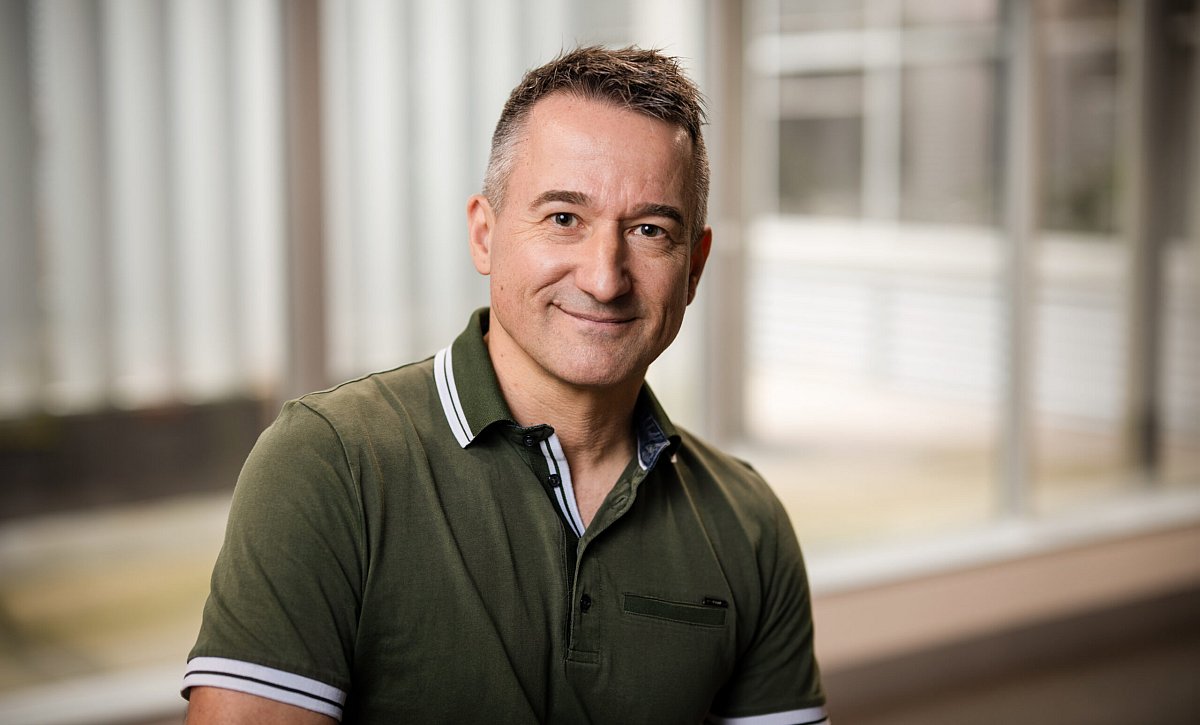
- Speaker: Professor Marcus Foth, Queensland University of Technology
- Time: Friday 5 June 2026 at 10:00–11:30
- Location: OASIS space, Pinni B (Kanslerinrinne 1), Tampere University centre campus + online via Zoom. Coffee will be served for on-site participants at OASIS. Online participants will receive the Zoom link well before the event.
- Sign up by 1 June 2026: https://forms.office.com/e/72PLcNqpvc
Drawing on interdisciplinary research in urban informatics, digital civics, and participatory design, Professor Marcus Foth introduces the concept of the Living Data Lab: a community-centred civic infrastructure that supports data literacy, collaborative sensemaking, and grassroots storytelling around urban sustainability challenges. Through case examples, the talk explores how genAI can augment local advocacy capacities, e.g., helping communities translate complex environmental data into actionable narratives, engage institutions more effectively, and participate meaningfully in sustainability transitions.
Positioned within debates on responsible digitalisation, this talk critically interrogates the double-edged nature of AI and data infrastructures. It argues for a shift away from extractive “smart city” models towards co-designed and socially accountable digital systems that support urban resilience, ecological care, and inclusive governance. The talk offers provocations for human-computer interaction and interaction design researchers, sustainability scholars, and practitioners seeking to align technological innovation with just and transformative urban futures.
Speaker bio
Marcus Foth (/foːt/) is a Professor in Strategic Design in the School of Design and a Chief Investigator in the QUT Digital Media Research Centre (DMRC), Faculty of Creative Industries, Education, and Social Justice, Queensland University of Technology, Brisbane, Australia. For more than two decades, Marcus has led ubiquitous computing and interaction design research into interactive digital media, screen, mobile and smart city applications. Marcus founded the Urban Informatics Research Lab in 2006. He is a founding member of the QUT More-than-Human Futures research group.
Marcus has published more than 300 peer-reviewed publications. He served on Australia’s national College of Experts (2021 – 2025). He is a Fellow of the Australian Computer Society and the Queensland Academy of Arts and Sciences, and a Distinguished Member of the international Association for Computing Machinery (ACM).
Related readings
Foth, M. (2025). A Scientist’s Warning on Smart Cities: Rethinking Urban Sustainability for More-than-Human Futures. Journal of Urban Technology. https://doi.org/10.1080/10630732.2025.2575522
Foth, M., Emamjome, F., Mitchell, P., & Rittenbruch, M. (2022). Spatial data in urban informatics: Contentions of the software-sorted city. In S. Carta (Ed.), Machine Learning and the City: Applications in Architecture and Urban Design (pp. 367–378). Wiley. https://doi.org/10.1002/9781119815075.ch28
Fredericks, J., Foth, M., Caldwell, G., Tomitsch, M., & Vande Moere, A. (2026). Middle-Out Design for More-than-Human Cities: Integrating Human–Animal Relations in Urban Sustainability Planning. Smart and Sustainable Built Environment. https://doi.org/10.1108/SASBE-09-2025-0562
Luusua, A., Ylipulli, J., Foth, M., & Aurigi, A. (2023). Urban AI: Understanding the Emerging Role of Artificial Intelligence in Smart Cities. AI & Society, 38(3), 1039-1259. https://doi.org/10.1007/s00146-022-01537-5
Sheikh, H., Mitchell, P., & Foth, M. (2023). Reparative futures of smart urban governance: a speculative design approach for multispecies justice. Futures, 154, 103266. https://doi.org/10.1016/j.futures.2023.103266
Organisers
The talk is organised together with DigiSus and TURNS research platforms, and in cooperation with Sigchi Finland.