
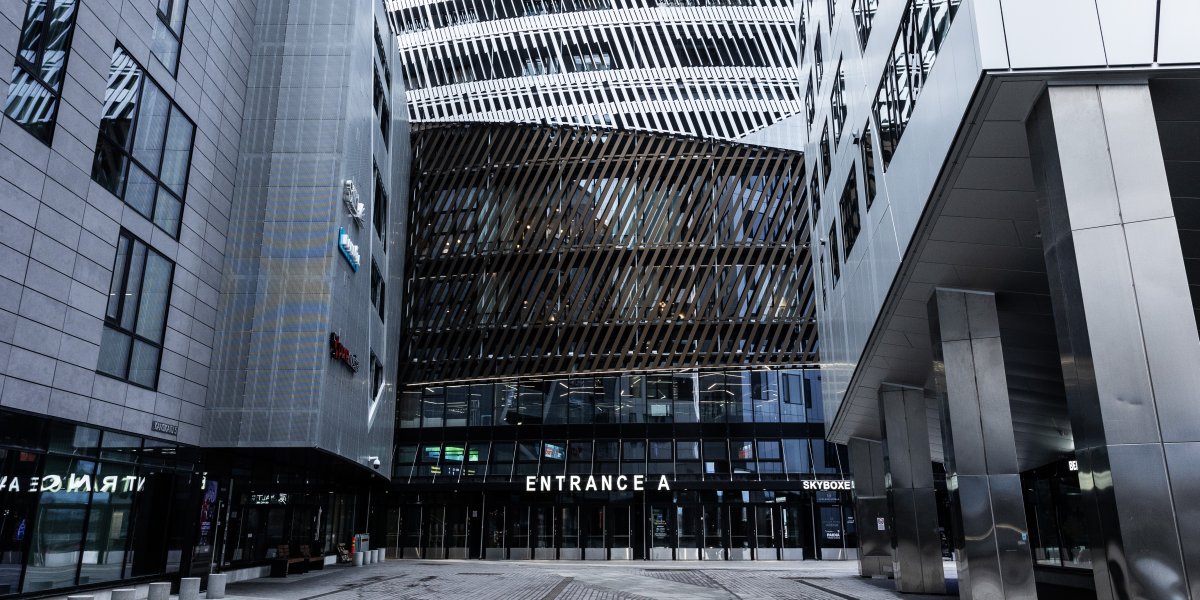
Tampere University’s Media Studies Research Group hosted a one-day seminar on 14 November 2025, 9–16, at Paidia (Kansikatu 3 / Nokia Arena). The event was also attended in Helsinki and followed online.
> See the summary of the seminar and its outcomes (PDF)
Seminar program
The seminar consists of two keynote speeches and workshops:
- Professor Eugenia Siapera, from University College Dublin, asks in her keynote speech if AI can be sustainable. Prof. Siapera approaches this question through the economic, environmental, and societal dimensions. Her talk is based on early findings from a Horizon Europe Forsee project.
- Professor Helen Kennedy, from University of Sheffield, asks in her keynote speech what a good digital society looks like and how we get there. Prof. Kennedy approaches these questions by taking as a starting point the critiques of digital developments presented by social scientists, humanities scholars, and digital rights advocates and activists. Her talk draws on experiences from the ESRC Digital Good Network.
- In our workshops, seminar participants on site at Tampere get to discuss and devise solutions, share knowledge on making an impact, and envision a more equitable and socially sustainable future.
The keynotes and the workshops can also be attended in a satellite event in Helsinki at Rajapintapäivät (workshop location: University of Helsinki, Snellmania, Unioninkatu 37, 1st floor). The keynote speeches without workshop participation can be followed online. The link will only be provided upon registration. Sign up by 3 November to participate: https://forms.cloud.microsoft/e/dRqaeqJxtN
The aim of the event is to think about the ways in which research can enhance a more sustainable and fair digital environment. Our aim is to bring together researchers who are working in projects that explore, in different ways, questions around social sustainability, regulation, equality, ethics and fairness related to digital environment, particularly to digital platforms and the Internet. Since there is already a substantial amount of research on the problems and concerns around digital, datafied environment, this event seeks to look more into the different alternatives and solutions – particularly exploring the ways in which researchers could enter the debate and make an impact: how can we make use of our expertise; what kind of collaborations could we further; what kind of creative research activities could we pursue? What insights from your research and experiences with these themes would you like to share with the audience?
Towards socially sustainable platforms (SoSu) seminar timetable in Tampere*
| 8.45 | Doors open, coffee serving |
| 9.15 | SoSu-team introductions: What do we mean by Social Sustainability in digital environment & the plan for the day |
| 9.30 | Keynote 1, Eugenia Siapera: Sustainable AI? Contradictions, Costs, and the Limits of Governance |
| 10.30 | Workshop 1, SoSu-team: Reimagining solutions and governance |
| 11.30 | Lunch break (lunch at own cost) |
| 12.30 | Keynote 2, Helen Kennedy: Reflections and challenges from the Digital Good Network: Exploring what a good digital society looks like and how we get there |
| 13.30 | Workshop 2, SoSu-team: Advancing towards Digital Social Sustainability |
| 15.00 | Discussions and reflections |
| 16.00 | Closing remarks |
*The satellite event in Helsinki at Rajapintapäivät has the same program without coffee being served.
Organisers
SoSu-team: Reeta Pöyhtäri, Kaarina Nikunen, Paula Haara, Kari Söderqvist (Media Studies, Tampere University) & Minna Vigren (LUT University) & Aleksi Knuutila (workshop host at University of Helsinki/Rajapinta)
Contact: kari.soderqvist@tuni.fi; reeta.poyhtari@tuni.fi, tel. 050-4739394; kaarina.nikunen@tuni.fi, tel. 040-1904094
This event is funded by the DigiSus Research Platform.
Keynote abstracts
Professor Eugenia Siapera, University College Dublin: Sustainable AI? Contradictions, Costs, and the Limits of Governance
This talk asks: Can AI be sustainable? I approach this question through three dimensions of sustainability, economic, environmental, and societal, while drawing on early findings from the Horizon Europe Forsee project, including interviews with civil society organisations (CSOs), trade unions, and small- and medium-sized enterprises (SMEs) on how they conceive “successful” AI.
Economically, AI must be situated in the post-2008 context of capitalist crisis, where it has been framed not only as technological innovation but as a techno-solution to restore productivity. Yet such gains remain contested and, where realised, are transformed into capital accumulation at the expense of labour, raising doubts about AI’s long-term economic sustainability at least from the point of view of labour. Environmentally, the extractive and energy-intensive demands of AI systems generate enormous ecological costs, even as AI is folded into ‘green capitalist’ agendas that prioritise growth over repair. Societally, AI reshapes social reproduction in ways that intensify dependencies, reproduce systemic biases, and unevenly burden already vulnerable communities and in this manner compromising rather than enabling collective flourishing.
These contradictions raise a pressing governance question: can the EU’s current model of risk-based AI regulation meaningfully address such structural issues? While this approach may mitigate discrete harms, it leaves untouched the underlying political-economic logics that drive unsustainable trajectories. The talk therefore concludes by asking how governance might be reimagined in ways that do not merely manage risks, but actively reshape the conditions under which AI is developed, deployed, and evaluated, opening space for more genuinely sustainable digital futures.
Professor Helen Kennedy, University of Sheffield: Reflections and challenges from the Digital Good Network, exploring what a good digital society looks like and how we get there
The ESRC Digital Good Network asks what a good digital society looks like and how we get there. It takes as its starting point the substantial critiques of contemporary digital deployments offered by social scientists, humanities scholars, and digital rights advocates and activists. In surveying these critiques, the contours of the digital society we don’t want become clear. The Digital Good Network takes the next analytic step, inspired by a vein of scholarship that challenges us to imagine more desirable futures (e.g. Benjamin 2024). In other words, we pivot from the question ‘what digital society don’t we want?’ to ‘what kind of digital society do we want, and how do we get there?’.
Over the past three years, we have carried out and funded research, trained researchers, and connected with stakeholders, in pursuit of answering these questions. In this presentation, I present some examples of our efforts to identify what a good digital society looks like and routes to achieving it and I reflect on some of the challenges that arise when asking normative questions like ours. These include the thorny issue of who gets to define good, better, desirable, sustainable, and other highly contested matters of language. A good digital society requires us to celebrate polyvocality, but how do we translate that into action? The lack of consensus about how to evaluate whether technologies contribute to a good digital society, whether to measure, and whether it’s possible to abstract general principles from specific contexts are further challenges. Imagining a better digital future requires interdisciplinary and cross-sectoral collaboration – I conclude with some thoughts about the pleasures and pains of such partnering.
***
Photo: Jonne Renvall, Tampere University