
Augmentative Technology
Together we shape technology that reflects, respects, and enriches all lives.
About the Research Group
We, the Augmentative Technology group, are a collaborative research collective that brings together nurses, speech and language therapists, hardware and software engineers, psychologists, designers and sociologists to create technology that augments everyday life.
Examples of Our Projects
Augmentative and Alternative Communication Reality
Timeline: 8/2024–8/2026
The project hypothesizes that augmented reality (AR) can revolutionize communication and social interaction, particularly for individuals with aphasia, intellectual disability, or those on the autism spectrum. While augmentative and alternative communication (AAC) technologies are crucial for many people, they suffer from poor design due to lack of user involvement. This project aims to address this by developing a participant-driven methodology to collect user data. The goal is to create AAC-Reality, an AR framework to enhance face-to-face communication and social interaction, and to assess its effectiveness through practical demonstrations.
Funded by Jane and Aatos Erkko Foundation.
Digital Tools for Supporting Participation, Functional Ability, and Client-Centered Services
Timeline: 4/2024–10/2026
🔗 Project Website
The project aims to enhance the inclusion and capabilities of persons with intellectual disabilities through engaging and enabling technologies, which are co-designed with users. The key goals include to facilitate daily routines and manage sensory overload. The project builds on insights from our previous projects in well-being technology initiatives and involves collaboration with multiple stakeholders.
The project is carried out in collaboration with Satakunta University of Applied Sciences. Funded by European Social Fund Plus.
Reliable Electronics for Tomorrow’s Active Systems
Timeline: 2/2020–7/2025
🔗 Project Website
This project creates an international and inter-sectoral network of academic and industrial members (organizations from Finland, France, Poland, UK, and China). We work through a series of workshops and secondments and develop novel tools for agile design, testing, analysing, and improving the reliability of new devices in various demanding applications and environments, e.g., automotive user experiences, active safety systems, and assisted living.
Funded by European Commission (RISE, H2020).
EVIL-AI: The Identification and Mitigation of the Negative Effects of Artificial Intelligence Agents
Timeline: 9/2024–8/2028
The project investigates manifestations of malicious artificial intelligence (AI), such as chatbots, physical artefacts as agents, and metaverse avatars. We specifically examine different encounters between humans and AI agents, from virtual reality to the physical world, and study the development of malevolence in AI agents and various risk scenarios, such as phishing and spreading misinformation, where AI agents are harnessed for malicious purposes.
This project is a collaboration with research groups of Prof. Henri Pirkkalainen and Prof. Pekka Abrahamsson. Funded by Jane and Aatos Erkko Foundation.
Research Leader
Johanna Virkki
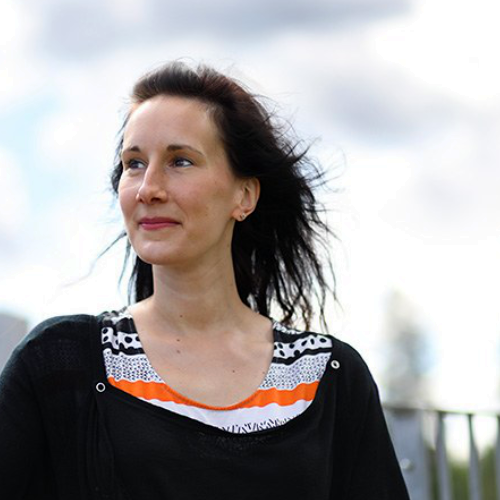
Johanna is currently an Associate Professor of gameful technology and heading the Augmentative Technology Research Group, Tampere University.
Her research interests include wearable technology and smart clothing, augmentative and alternative communication, and enabling environments.
Our People
Asif Shaikh

Post-Doctoral Researcher
Asif is a doctoral researcher who is interested in artificial intelligence (AI), large language models (LLMs), robotics, wearable technology, smart clothing, and other embodied systems.
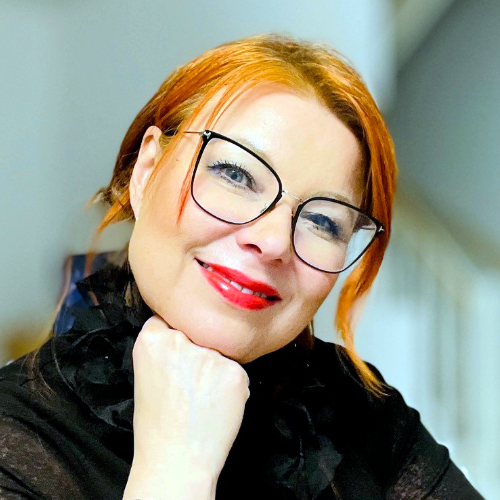
Tanja Vihriälä
Post-Doctoral Researcher
Tanja is a postdoctoral researcher who leverages over 20 years of speech‑language therapy experience to develop inclusive, multimodal AAC technologies through participatory, stakeholder‑driven design.
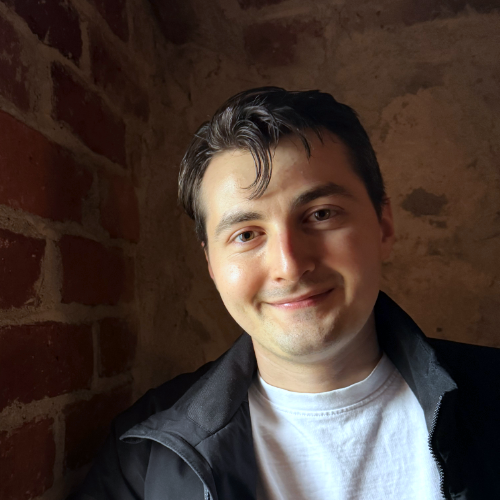
Aygün Varol
Doctoral Researcher
Aygün is a doctoral researcher, who develop AI-driven smart indoor environments that improve health and comfort while ensuring privacy and sustainability through IoT sensor networks.
✉️ aygun.varol@tuni.fi
🔗 Personal Website ● LinkedIn ● Google Scholar ● GitHub ● HuggingFace
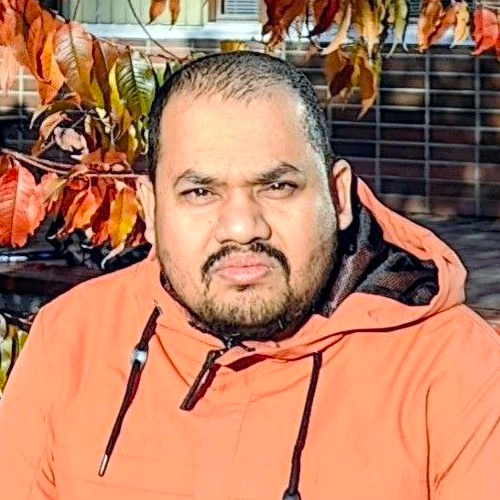
S M Musfequr Rahman
Doctoral Researcher
S M Musfequr is a doctoral researcher developing intelligent, electro‑textile‑enabled wearables that monitor physiological signals, employing fabrication, system integration, testing, and data analysis to create human‑centric technologies that improve health and everyday life.
✉️ smmusfequr.rahman@tuni.fi
🔗 ORCID ● LinkedIn ● Google Scholar
Mustasin Sakif
Anni Raukko
Jaana Mäkinen

Project Coordinator
Jaana is an interpreter for the Speech Impaired; graduated in 2009. Since 2011, Jaana is a specialist in Augmentative and Alternative Communication (AAC) Materials.
Joose Vestelin

Research Assistant
Joose’s main focus is on the ethical risks and potential harms of artificial intelligence toward vulnerable populations, as part of a contribution to the broader EVIL‑AI project. As a research assistant, Joose has aided in research tasks for the Digital Tools for Supporting Participation, Functional Ability, and Client‑Centered Services project.