

INSIGHT
Navigating the Shadows of Digital Transformation
About the Research Group
The INSIGHT Research Group is dedicated to generating socio‑technical insights within the field of Information Systems (IS) research.
Our work concentrates on three interrelated domains: the dark side of IS, which encompasses technostress and the negative consequences of artificial intelligence; the organizational adoption of emerging technologies such as the metaverse and agentic AI; and the governance of information systems, with particular attention to emerging credentialing models like micro‑credentials.
We consider it essential to examine how organizations can integrate new technologies responsibly. While we are fascinated by the possibilities offered by novel tools and practices—including gamified processes—we remain firmly rooted in the critical, evidence‑based tradition of Nordic and Scandinavian IS scholarship. To achieve a comprehensive understanding, we employ a blend of quantitative, qualitative, and design‑science methodologies. This mixed‑methods approach enables us to identify ways in which both organizations and societies can reap the benefits of information systems while mitigating intended and unintended adverse effects associated with their deployment and use.
By combining empirical analysis with critical design thinking, the INSIGHT Research Group aims to shape a future where technological innovation aligns with ethical standards, societal well‑being, and sustainable organizational practice.

Our Projects
EVIL-AI: The Identification and Mitigation of the Negative Effects of Artificial Intelligence Agents
Timeline: 2024–2027
🔗 Project Website
The EVIL‑AI (“evil eye”) project at Tampere University, funded by a €1.413 million grant from the Jane and Aatos Erkko Foundation, is a pioneering four‑year research programme that tackles the dark side of artificial‑intelligence agents. Led by Professor Henri Pirkkalainen, with co‑leaders Professor Pekka Abrahamsson and Associate Professor Johanna Virkki, the initiative investigates how autonomous AI systems can be misused for deception, cyber‑crime, and malicious behaviour in both virtual‑reality and physical environments. By mapping risk scenarios, developing proactive mitigation techniques, and shaping policy recommendations, EVIL‑AI aims to safeguard societies from unethical AI while fostering responsible innovation. The project’s multidisciplinary approach, spanning information systems, software engineering, and gamified interaction design, positions Tampere University as a world‑leading centre for dark‑AI research and establishes a lasting research unit dedicated to the safe advancement of emerging technologies.

This project is a collaboration with research groups of Assoc. Prof. Johanna Virkki and Prof. Pekka Abrahamsson. Funded by Jane and Aatos Erkko Foundation.
ECIU University (ECIUn+)
Timeline:2022-2026
🔗 Project Website
The ECIUn+ project encompasses multiple stakeholders at Tampere University. ECIU University is a European alliance of 13 innovative universities that aims to create a new European university model. It focuses on challenge-based learning, research, and innovation to address real-life societal problems in collaboration with cities, businesses, and communities.
INSIGHT is a task leader (budget 450.000€) for Micro-Credential platforms and Learner Guidance. These two tasks encompass new digital solutions for issuing and managing verifiable digital credentials for ECIU University, and the use of gamification and AI for learner guidance in online platforms.

Our People
Henri Pirkkalainen

Group Leader
Professor
Henri is a professor of Information and Knowledge Management (Organizational Information Systems) at Tampere University in Finland. He leads the INSIGHT Research Group. Henri’s research includes the “dark side” of IS (technostress, negative AI effects) and responsible adoption of emerging technologies (the metaverse, agentic AI, micro‑credentials). His research combines quantitative, qualitative, and design science methods. He is the director for the Business and Technology Management (TOTO) doctoral programme at TAU.
✉️ henri.pirkkalainen@tuni.fi
🔗 TUNI ● ORCID ● Google Scholar ● LinkedIn ● X
Maija Lampu

Lecturer
Maija is a university lecturer whose research focuses on public sector digital transformation, dynamic capabilities, resilience, and the tensions involved in organizational change. Maija teaches courses related to business-IT alignment and digital transformation, connecting theory with practice.
Henri Jalo

Post-Doctoral Researcher
Henri studies the dark side of AI, as part of the Evil AI project. As a quantitative expert, Henri seeks to understand how people can deal and mitigate the impacts of malicious AI systems.
✉️ henri.jalo@tuni.fi
🔗 LinkedIn ● Google Scholar ● ORCID
Osku Torro

Postdoctoral Researcher
Osku is a Postdoctoral Researcher researching AI‑enabled systemic transformation of the built environment, focusing on foundation models, AI agents, and human‑AI collaboration to reshape real‑estate and construction value chains. His work blends qualitative, design‑science, and theoretical approaches to create collaborative frameworks linking AI developers, industry partners, and public actors.
Givemore Muchenje

Post-Doctoral Researcher
Givemore is a postdoctoral researcher that conducts mixed‑method research into the harmfulness of conversational AI, based in the Evil Ai project.
Jenny Elo

Post-Doctoral Researcher
Jenny is a Postdoctoral Researcher who studies digital-age organizing and innovation, including how organizations transform, collaborate, and co-create value as technologies and data reshape work and services. In the AI Champion project, she is responsible for developing data governance foundations for AI-ready data flows in the construction industry. Her research draws on qualitative and conceptual approaches. She currently serves as Director-at-Large at the Association for Information Systems (AIS) Doctoral Student College, a leading global association for Information Systems scholars and professionals.
✉️ jenny.elo@tuni.fi
🔗 LinkedIn ● Google Scholar ● ORCID
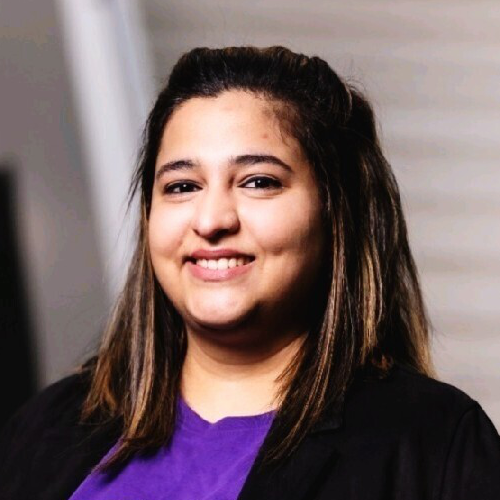
Bakhtawar Khan
Doctoral Researcher
Bakhtawar is a Doctoral Researcher, who explores how immersive technologies mediate human-nature relationships and promote wellbeing. She researches in the overlap of virtual nature, slow reflective engagement, and ecological curiosity. She has also investigated technostress in the work-related use of social VR. She is part of the Gameful Futures Lab.
✉️ bakhtawar.khan@tuni.fi
🔗 LinkedIn
Pratik Sapkota

Doctoral Researcher
Pratik studies how artificial intelligence shapes employee stress, coping, and well-being in modern workplaces.
✉️ pratik.sapkota@tuni.fi
🔗 LinkedIn ● Google Scholar ● ORCID
Saija Kotala

Doctoral Researcher
Saija is a lifelong active learner dedicated to enhancing employee well‑being through digital self‑help stress‑management interventions, especially online coaching. Using qualitative methods such as systematic reviews and thematic analysis, she uncovers evidence‑based, practical strategies that empower workers to manage stress independently and sustainably in the workplace.
Miiko Siivonen

Doctoral Researcher
Miiko is a Doctoral Researcher, who researches how gamification and artificial intelligence can steer learners toward novel learning opportunities. His work bridges competence development and emerging technologies.
✉️ miiko.siivonen@tuni.fi
🔗 LinkedIn ● ORCID
Intan Kaaffah

Doctoral Researcher
Intan is a doctoral researcher in Information and Knowledge Management who investigates how generative AI can empower teachers to enhance their instructional materials. With a background in applied statistics and industry experience in analytics, she is passionate about leveraging data to drive knowledge creation.
Janne Aaltonen

Doctoral Researcher
Janne is a Doctoral Researche, focusing on institutional and organizational perspectives of information security management in small and medium-sized enterprises. He also serves as CEO and CISO of ICT Elmo Oy, a Finnish ICT and cybersecurity company.
Salla Vornanen

Research Assistant / Master’s Student
Salla is a Master’s student in Information and Knowledge Management working as a research assistant within the AI Champion project. Her research focuses on socio-technical interactions between humans and AI systems, exploring effective and novel forms of human-AI collaboration.
Remote Members
Padmasheela Kiiskilä

Doctoral Researcher
Padmasheela is an academic researcher with over 20 years of experience in the technology industry, studying how digital innovation, governance, and system design foster trust, collaboration, and knowledge creation across organizational and societal contexts. Her work highlights how thoughtful design and governance of digital systems can build trust and enable innovation across organizations.
✉️ padmasheela.kiiskila@tuni.fi
🔗 LinkedIn ● Google Scholar ● ORCID