
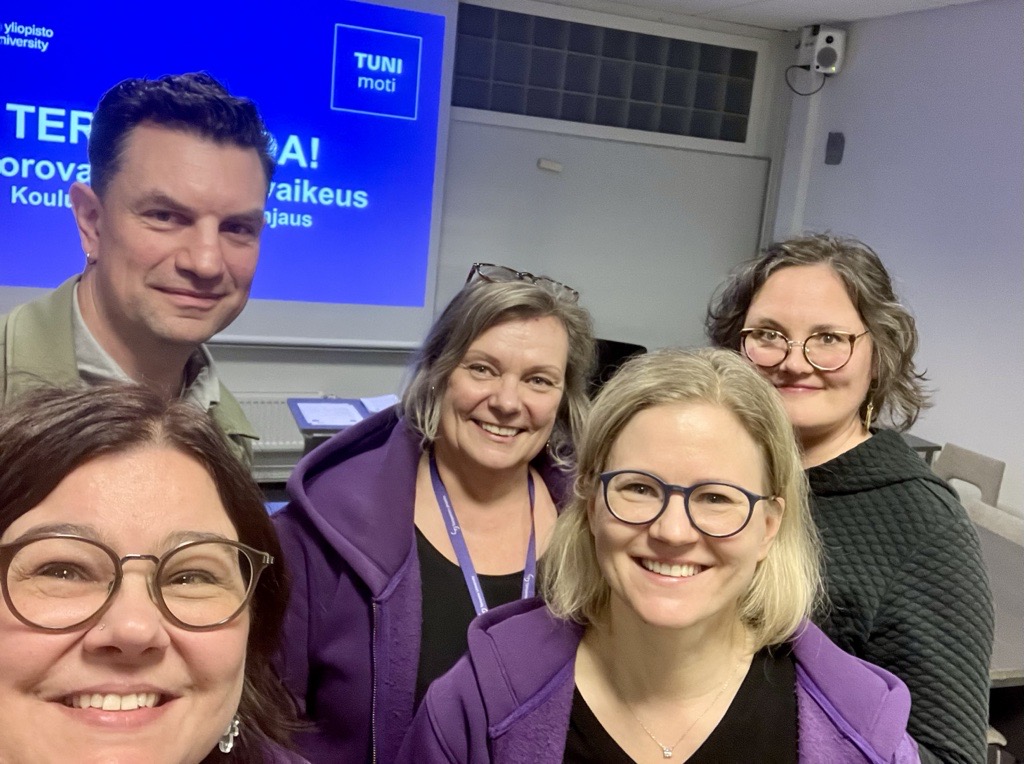
The MOTI project had the honor of hosting two visitors on Thursday, October 23, during our educational supervision meeting.
Gabriel McCormick from the Harvard Graduate School of Education visited Finland as part of his Eisenhower Fellowship, and we were also joined by our doctoral student and special education teacher, Sanna-Kaisa Liukko.
They observed the MOTI team’s teaching and offered valuable reflections on the project. Please note that all discussions during the educational supervision sessions are strictly confidential, whereas all the educational materials are available to share. The visitors’ insights were specifically related to the work of MOTI team members Elina, Merja, and Virpi.
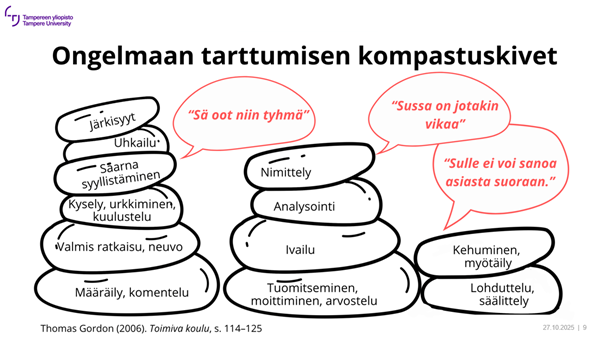
In October, the focus of our educational supervision meetings was on the challenges of interaction, particularly in situations where teachers, acting as class tutors, must intervene in students’ problematic behavior. Such interventions inevitably evoke emotional responses in both teachers and students. These moments often “get under the skin” and can escalate quickly. Therefore, our aim was to explore constructive strategies for intervention that preserve and strengthen pedagogical relationships between class tutors and students.
This session was grounded in Carl Rogers’ humanistic psychology and the work of his student and colleague, Thomas Gordon. Gordon conceptualizes interactional challenges as “roadblocks” and has developed a three-part messaging technique to support effective communication in difficult situations.
According to Gordon, constructive intervention should include the following elements:
- A neutral description of the situation – one that both parties can agree upon
- A description of the consequences – outlining the impact of the behavior
- The teacher’s personal emotional response – sharing how the situation affects them
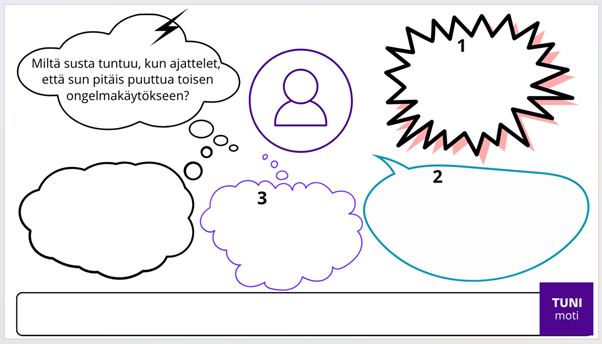
When we include these three elements in our interactions, situations typically do not escalate. The third step, when the teacher shares their own emotions, is especially important. Emotions must be met with emotions; they do not respond to reasoning alone. By sharing our feelings, we connect on a human level.
Thomas Gordon developed numerous programs that are taught and used in many countries, including Finland. For more information, please refer to Gordonin toimivat ihmissuhteet ry (GTIry) in Finnish and Gordon Training International in English.
MOTI project’s postdoctoral researcher Merja Viljanen, currently serves as the chair of the Finnish GTI.