
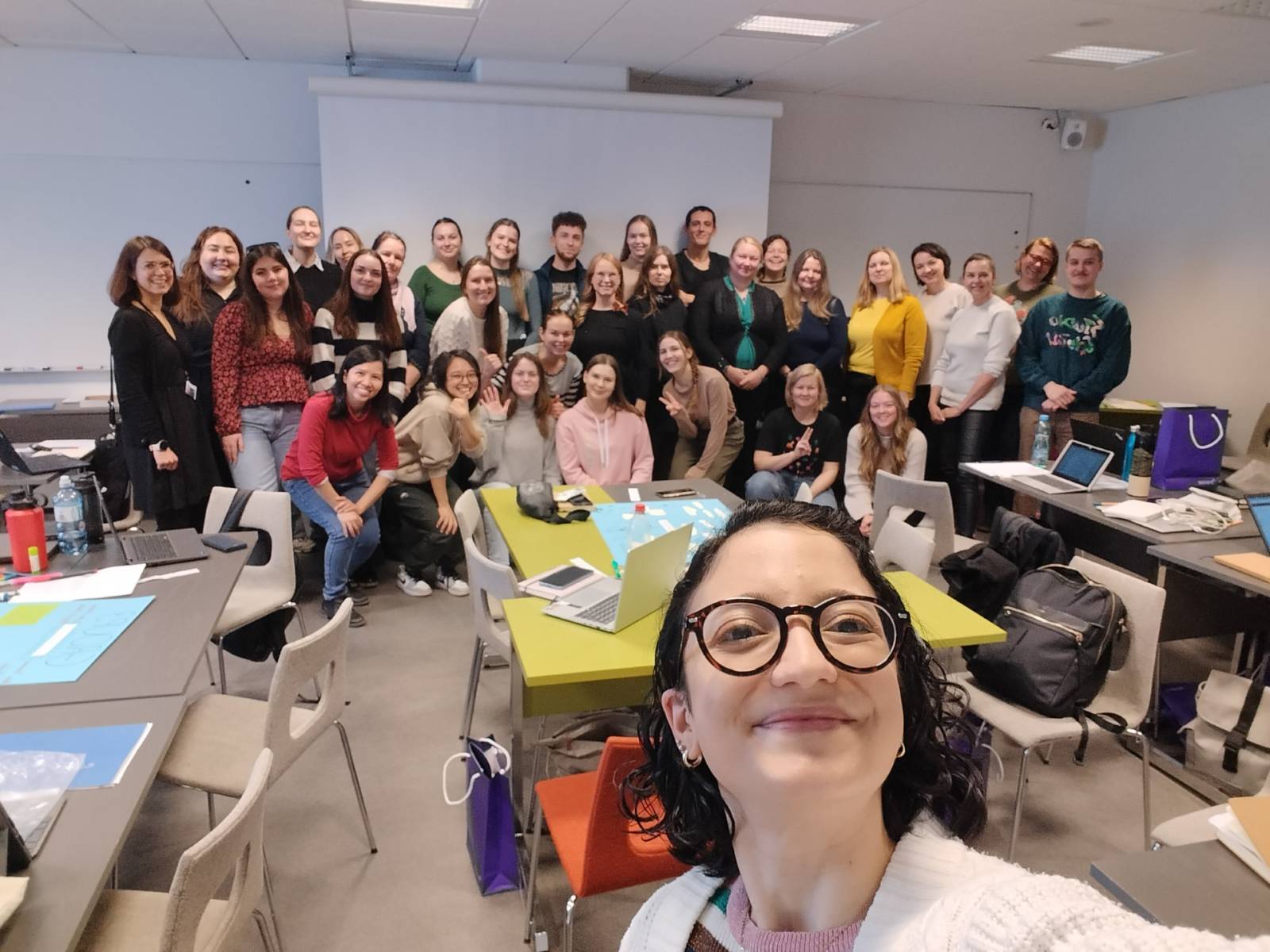
In May 2025, Tampere University proudly hosted the Erasmus+ Blended Intensive Programme (BIP) course “Ethics Education for Future Teachers”, an international initiative designed to bring together future educators from across four different universities to explore ethical questions in teachers’ profession. The programme gathered 23 student participants and 8 university teachers representing four universities: Tampere University (Finland), Palacký University Olomouc (Czech Republic), Tallinn University (Estonia), and Comenius University Bratislava (Slovak Republic). Over the course of three structured phases, participants engaged in collaborative learning, cultural exchange, and academic reflection on the ethical responsibilities of educators in today’s world.
This was the third time that the BIP was successfully carried out, and we hope to continue building on its success in the years to come! The course is designed as a blended learning experience, combining virtual and physical mobility. Tampere BIP began with a preparatory phase, held online over approximately two weeks. During this period, students completed a series of pre-tasks and participated in an online meeting that introduced the course themes and enabled participants to get to know one another. These activities helped build a shared foundation for the face-to-face segment of the programme, encouraging participants to already start engaging with diverse educational contexts and to get introduced with ethical perspectives present in transnational contexts.
The heart of the BIP was a five-day physical mobility period at Tampere University, where participants met in person for a series of workshops, group activities, a school field trip, and various leisurely activities. During this intensive week, students and teachers engaged deeply with ethical theories and practices relevant to the teaching profession, such as fairness, inclusion, integrity, responsibility, and professional judgement. The sessions encouraged open discussion and critical thinking about how ethical principles translate into real-life classroom situations. Additionally, the school visits at Tammela school and Norssi school provided an opportunity to learn about Finnish education. Student-teachers also had the opportunity to encounter teachers and ask them about their understanding of, and experience with, professional ethics.
Teachers’ professional ethics is deeply personal and simultaneously relational. During the BIP course we had time for both the personal reflection and the relational engagement on ethical issues. In addition to academic content, the programme included social events and cultural activities that allowed students to experience Finnish education and culture. Among these activities we had a trip to the Moomin museum and a relaxing time at the sauna and swimming in the lake. Following the in-person segment, students returned to their home institutions for the final phase of the course. This included post-course tasks aimed at consolidating learning and applying insights to their national educational contexts with peers from their own university. A final online meeting offered space for reflection, feedback, and the sharing of ideas and experiences from across the participating countries. Students were awarded ECTS credits upon successful completion of the programme.
This BIP course exemplifies the power of international cooperation in higher education. By combining digital and physical learning environments, the programme created a space for intercultural exchange and professional development while addressing a crucial topic that transcends national borders — ethics in teacher education. Participants not only gained academic knowledge and practical skills, but also built meaningful connections with peers and educators from different countries.
As education systems worldwide face complex challenges, ethics education is becoming increasingly vital in shaping responsible, reflective, and empathetic teachers. The success of the “Ethics Education for Future Teachers” BIP course highlights the value of Erasmus+ initiatives in supporting such efforts and underscores the commitment of Tampere University and its European partners to fostering inclusive and ethical teaching practices for the future.
Text and photo by Maria Ciantar, teacher of the Finnish BIP team