
SUB-THEME 41: ACTIVITY THEORY AND FORMATIVE INTERVENTIONS IN ORGANIZING
Programme
1.Opening session
Introduction of the sub-theme by the convenors:
Yrjö Engeström (University of Helsinki), David Allen (University of Leeds) and Annalisa Sannino (Tampere University)
Keynote address:
A Change Lab for maternity care in Brazil: Gender, evidence and rights in times of uncertainty
Carmen Simone Diniz, University of São Paulo
2.Change Laboratory and formative interventions
A multi-site formative intervention study for inclusive organizational design in the United States
Aydin Bal, University of Wisconsin-Madison
Kemal Afacan, Artvin Çoruh Üniversitesi
Halil Ibrahim Cakir, University of Wisconsin-Madison
The Change Laboratory as a research instrument: From methodology to methods and back
Yrjö Engeström, Univesity of Helsinki
Annalisa Sannino, Tampere University
3. Formative interventions and expansive learning
Change Laboratories for all schools in a Swedish municipality – towards a systemic approach
Maria Spante, University West
Expansive learning and change of practice for nurses collaborating in transitional care of older adults
Rikke Buus Bøje, Peter Musaeus, Dorthe Sørensen, Mette Spliid Ludvigsen, Aarhus University
Modeling degrowth: Long cycle of expansive learning in a food cooperative
Juhana Rantavuori, University of Helsinki
4. Agency and expansive learning
Expansive learning for the enactment of a utopia? The case of the Homelessness strategy in Finland
Annalisa Sannino, Tampere University
Education as a collaborative intervention: Toward building a community of agency in disaster prevention learning
Katsuhiro Yamazumi, Kansai University
Fostering transformative agency through collective volitional action at work: The history of sustained change in responding to emergencies during birth
Nick Hopwood, University of Technology Sydney
Johanna Dahlberg, Marie Blomberg& Madeleine Abrandt Dahlgren, Linköping University
5. Contradictions and tensions
Supporting a policy of success for disadvantaged schools: Identification of contradictions around hierarchical power issues between activity systems
Yannick Lémonie, Cnam, Paris
Vincent Grosstephan, ESPE Champagne-Ardennes, Reims
Jean-Luc Tomàs, Cnam, Paris
“CO” in coworking as a short of contradictions?
Silvia Ivaldi, Università degli Studi di Bergamo
Annalisa Sannino, University of Tampere
Giuseppe Scaratti, Università Cattolica di Milano
Activity theory as a framework for analysing service provision in a prison system: A case study from Norway
William Dugdale, Bournemouth University
Päivikki Lahtinen, University of Helsinki & University of Stavanger
Anu Kajamaa, University of Helsinki
6. Digital tools and technologies
An Activity Theory perspective on digital inclusion
Sharon Wagg, Boyka Simeonova & Louise Cooke, Loughborough University
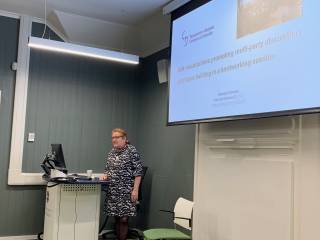
BIM visualizations promoting multi-party discussion of a future building in a knotworking session
Hannele Kerosuo, Tampere University
Enlightening the pre-implementation of a digital tool and anticipate individual change by analyzing the activity. An illustration through the activity of French teachers-researchers
Marie-Laure Weber & Florence Rodhain University of Montpellier
7. Collaboration and materiality
Inter-organisational collaboration in the public sector: An activity theory approach
Fatema Zaghloul, Alistair Norman & David Allen, University of Leeds
Social movement learning in a food cooperative: Opening up sociomateriality with activity theory
Sami Paavola, University of Helsinki
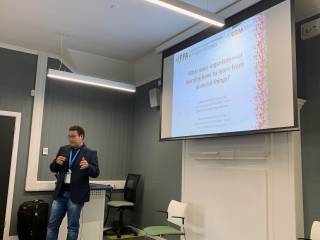
What does organizational learning have to learn from material things?
Gabriel do Carmo Yamamoto & Marcio P. Cassandre, State University of Maringa