As part of the SustAInLivWork project, we offer international AI Fellowships at our research group. On the SustAInLivWork homepage you will find all relevant information on the application process.

An overview of possible research topics (based on our Research Roadmap 2025-2030) and accompanying tasks (realistically, only 1 task is possible within a month), are listed below. As a fellow in our program, you can engage in a hands-on research project through access to our state-of-the-art Research Infrastructure. By bringing in your own ideas, you will conduct impactful research within the domain of autonomous mobile machines, thereby extending existing software frameworks.

A good understanding of robotics concepts and proficiency in programming (e.g., Python, C++, ROS/ROS2) are recommended for this internship, as well as familiarity with deep learning tools.
AI Fellowship Topics

1. Perception & Sensing

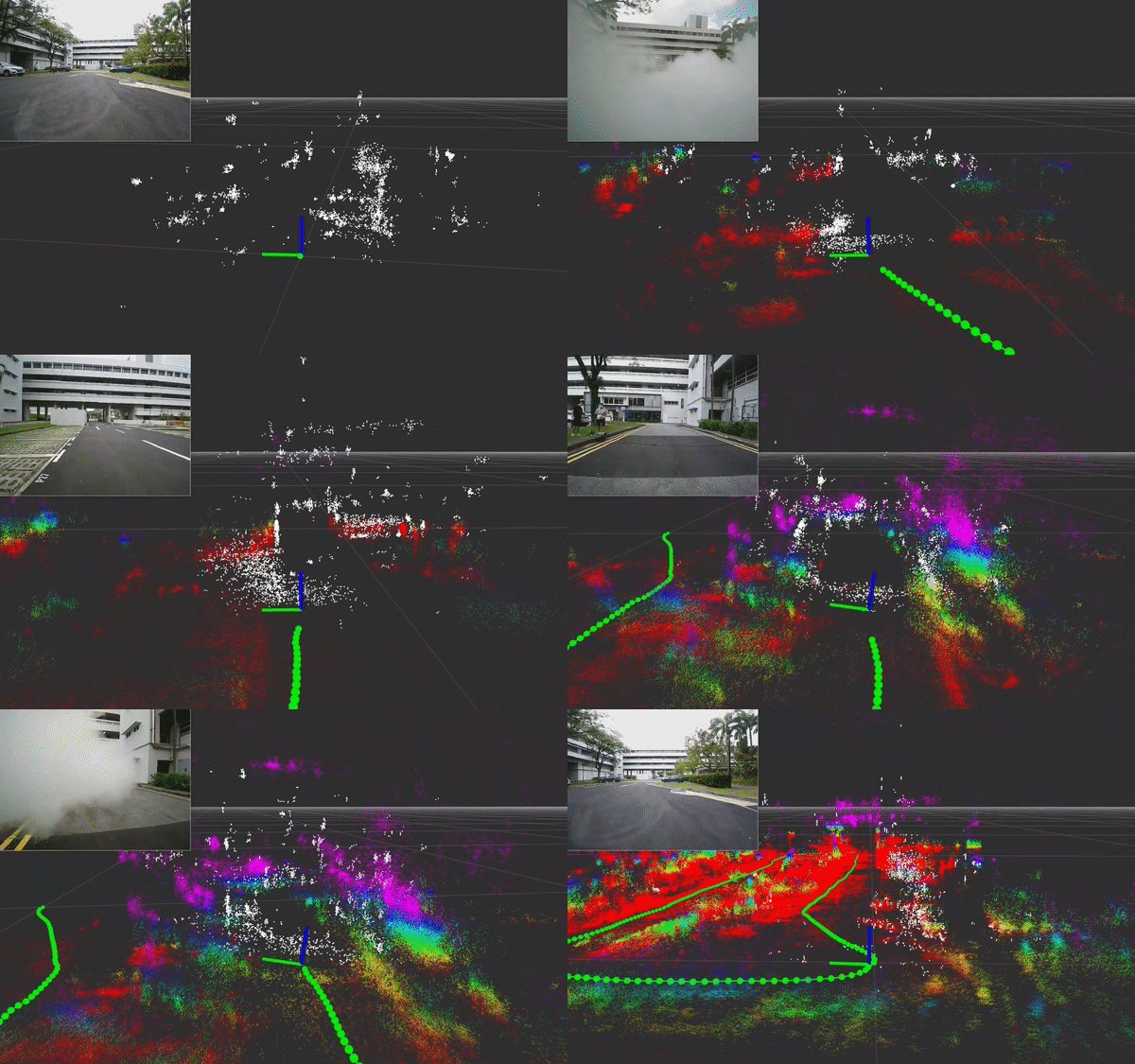
An image of radar data compared with camera data

  • Real time SLAM (Simultaneous Localization and Mapping): Tasks could include creation of ROS2 Node wrapper for sensors; collecting datasets & integrating existing SLAM frameworks into ROS2 environment; etc.
  • Multimodal sensor calibration: Tasks could include calibration of real-world sensor rigs; design & calibration of virtual sensor rigs; creating sensor models; comparing results against a ground truth; etc.
  • Key skills required: Python, ROS2, C++​, Gazebo

2. Safe Motion Control & Task Automation

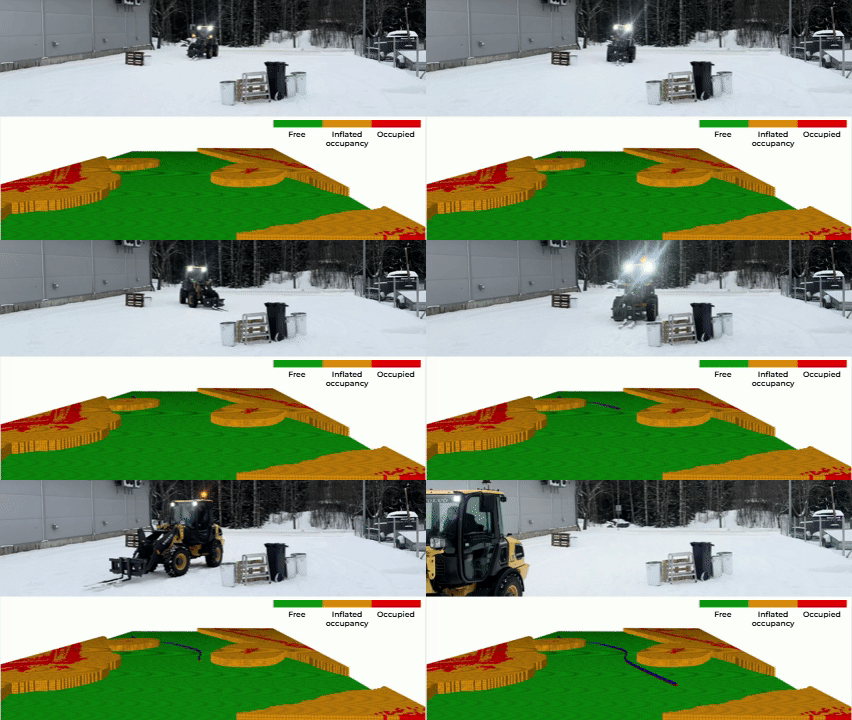
Gif image/video of a wheel loader traversing on snow with simulated CBF obstacles

  • Terrain elevation mapping: Tasks could include LiDAR point-cloud fusion; building robot-centric and global terrain elevation grid maps; learning-based elevation mapping; etc.
  • Environment modeling for safe navigation: Tasks could include Machine Learning or data processing from vision sensors; creating a mapping module for point-cloud fusion (LiDAR or RGB data); coupling mapping module to a simple path planner; etc.
  • Key skills required: Python, PyTorch, C++, ROS/ROS2, Machine Learning, Computer Vision.

3. Simulation & Data-Driven Modeling

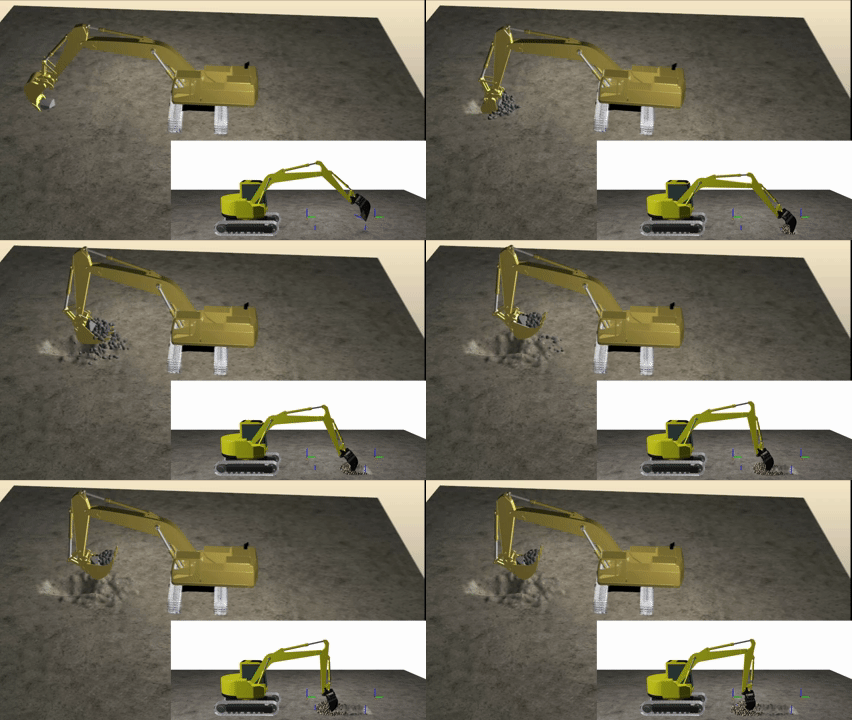
Gif image/video of 2 excavators within a simulator- one is trenching, one is excavating a rock.

  • Sub-surface rock detection using simulation: Tasks could include simulating excavation of sub-surface level rocks; loggin forces on the bucket; time-series anomaly detection using advanced Machine Learning; etc.
  • Imitation Learning for rock excavation: Tasks include simulating excavation of sub-surface level rocks; logging pressures, joint states, & actions; training a policy; sim-to-real transfer; etc.
  • Key skills required: Python, PyTorch, Machine Learning.