
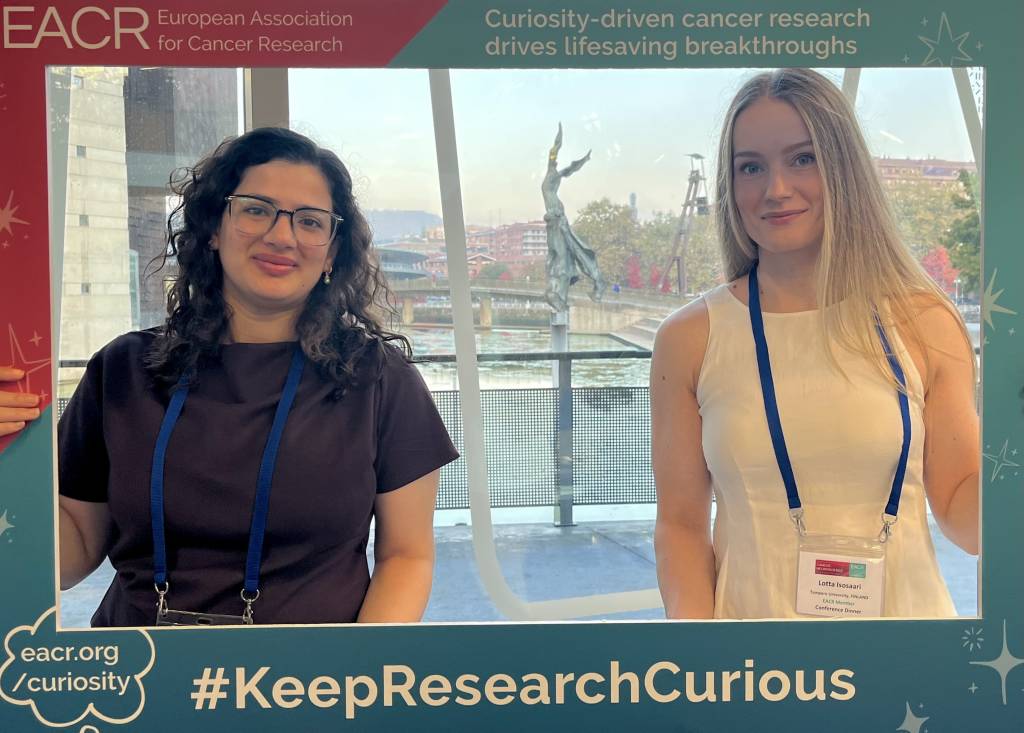
Doctoral Researcher Lotta Isosaari has been awarded three years of research funding from the Finnish Cultural Foundation and one year of funding from the Instrumentarium Science Foundation, and Postdoctoral Researcher Uzma Hasan has received one year of funding from Wihuri Foundation to advance research on modeling Glioma-Brain interactions using organ-on-chip techniques. Both researchers are working in NeuroGroup led by PI Adj. Prof. Susanna Narkilahti at Faculty of Medicine and Health Technology (MET) at Tampere University.
The new project emerges as a continuation of the work carried out within the Centre of Excellence in Body-on-Chip Research (CoEBoC). This has also facilitated new collaborative actions in MET, namely with groups of Adj. Prof. Kirsi Rautajoki and Adj. Prof. Joonas Haapasalo in tackling challenges of hard-to-treat gliomas, initially supported by MET bequest funding 2024.
Building on recent breakthroughs of modelling tumor microenvironment
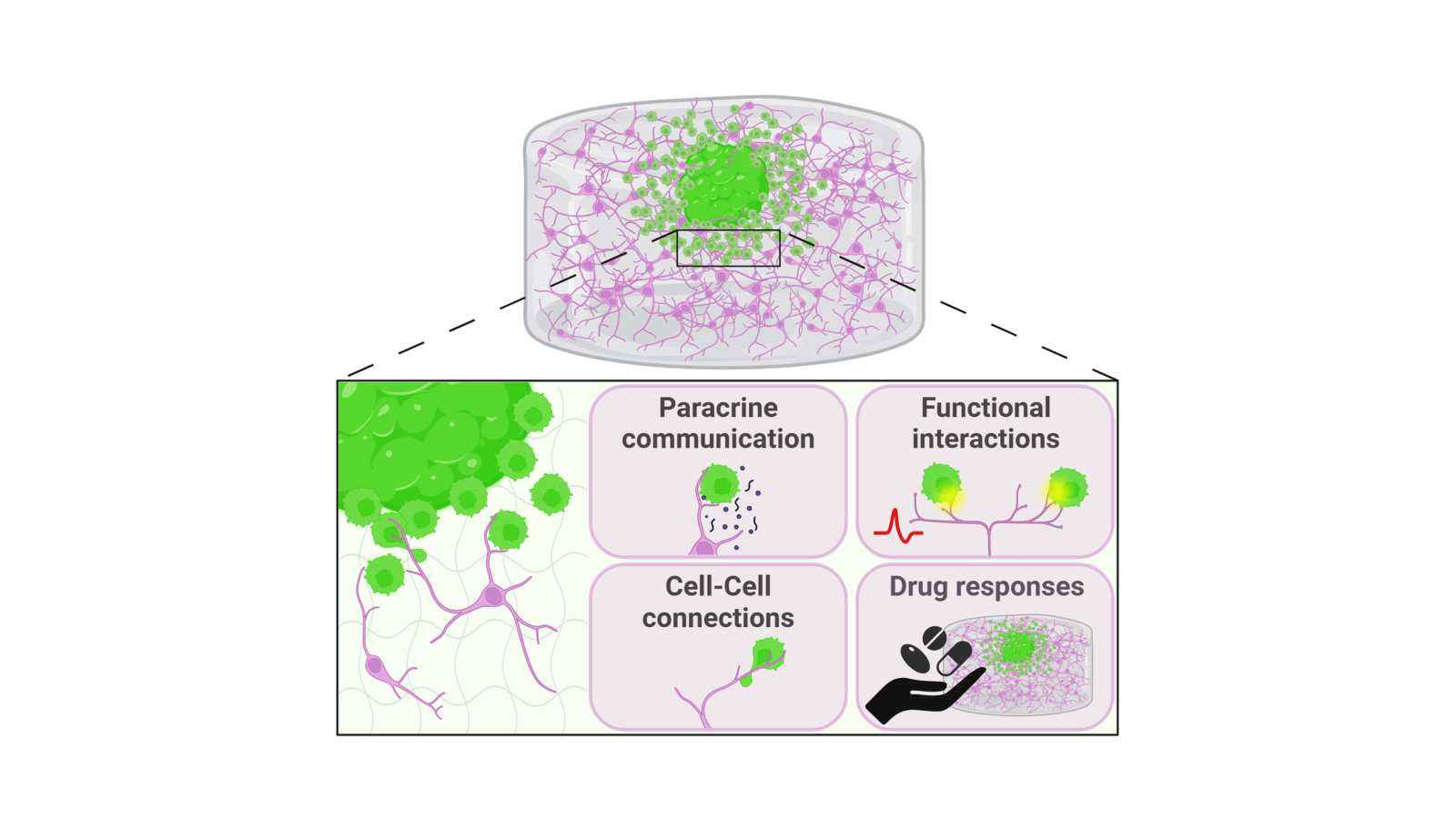
Earlier this year, the team published a significant study of a novel 3D human coculture model that mimics interactions between glioblastoma cells and neurons. The work, co-authored by Nanna Förster, Lotta Isosaari and colleagues from Tampere University, was published in The FASEB Journal titled Functional 3D Human Neuron–Glioblastoma Model Reveals Cellular Interactions Enabling Drug Safety Assessments. The model revealed how both functional neuron-glioblastoma connections and paracrine signaling in the tumor microenvironment supports glioblastoma progression and demonstrated the selective efficacy of temozolomide in inhibiting tumor invasion while preserving neuronal integrity.
Looking ahead
This new project continues to explore glioblastoma-brain interactions using advanced organ-on-chip platforms, aiming to develop more predictive models for therapeutic testing and deepen our understanding of tumor biology in the central nervous system.