
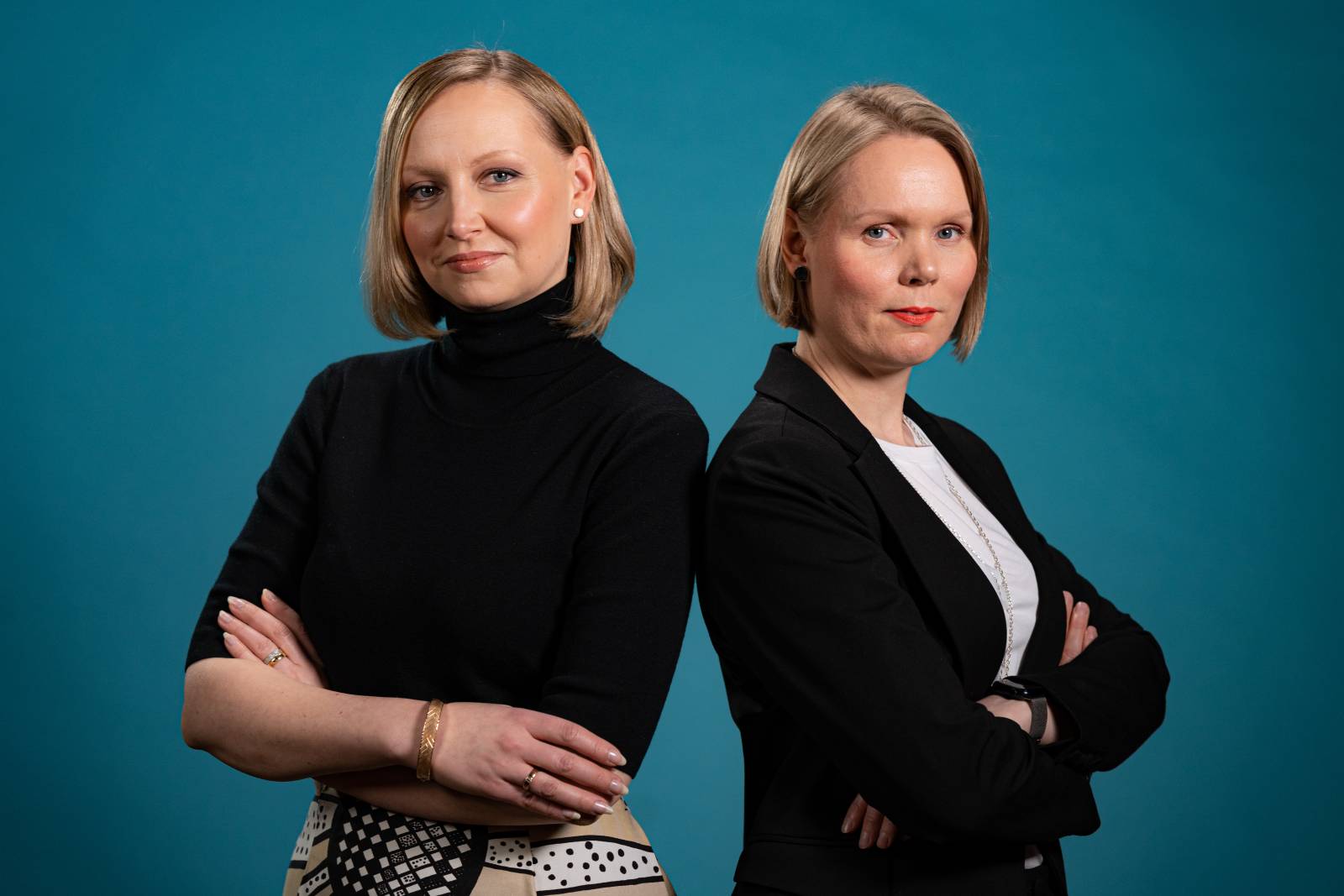
Authors: Anastasiia Yiannacou, Miina Björninen
“I would never do it,” Anne-Marie Haaparanta amusedly recalls saying when her researcher colleague, Virpi Muhonen first suggested their project could become a company. Both academic researchers had entrepreneurial parents and understood the dedication needed to run a company. But as their research progressed, the idea of commercialization became harder to ignore.
At the time, Haaparanta and Muhonen were developing cartilage repair implants as part of a research-to-business project funded by Business Finland, formerly known as Tekes – the Finnish Funding Agency for Technology and Innovation. The results of the project were very promising. As the project progressed, the idea of establishing a company began to grow, and the feeling of certainty ruled out all doubts.
“And then we just decided that we need to do this, let’s see how it goes”, Haaparanta recalls. With that, Askel Healthcare Ltd was established in 2017, launching its first product, the COPLA Cartilage implant first for animal healthcare for joint cartilage defects. Now, the company is expanding into human healthcare for both the European and US markets in the coming years.
The Master’s thesis that led to the right path
Haaparanta unknowingly started building her expertise for her future company during her Master’s thesis. The thesis focused on cartilage repair and the use of collagen in cartilage repair products. Her doctoral research, completed in 2015, centered on highly porous composite scaffolds for cartilage and osteochondral tissue engineering and was guided by Professor Minna Kellomäki.
Following her PhD, Haaparanta pursued postdoctoral research at the former Tampere University of Technology (now Tampere University), focusing on collagen-polylactide scaffolds for cartilage repair, in collaboration with the former University of Tampere and University of Helsinki in a research to business project funded by Business Finland. Haaparanta met Virpi Muhonen already during her PhD studies when they entered to collaboration first in a research project, where Muhonen was the principal investigator at orthopedic department at University of Helsinki.
“It was easy to communicate with Virpi and we understood each other from day one, even though we were working in two different cities and could not work side by side as such. Mutual respect helped the collaboration, especially since we were not very familiar with each other’s fields.”
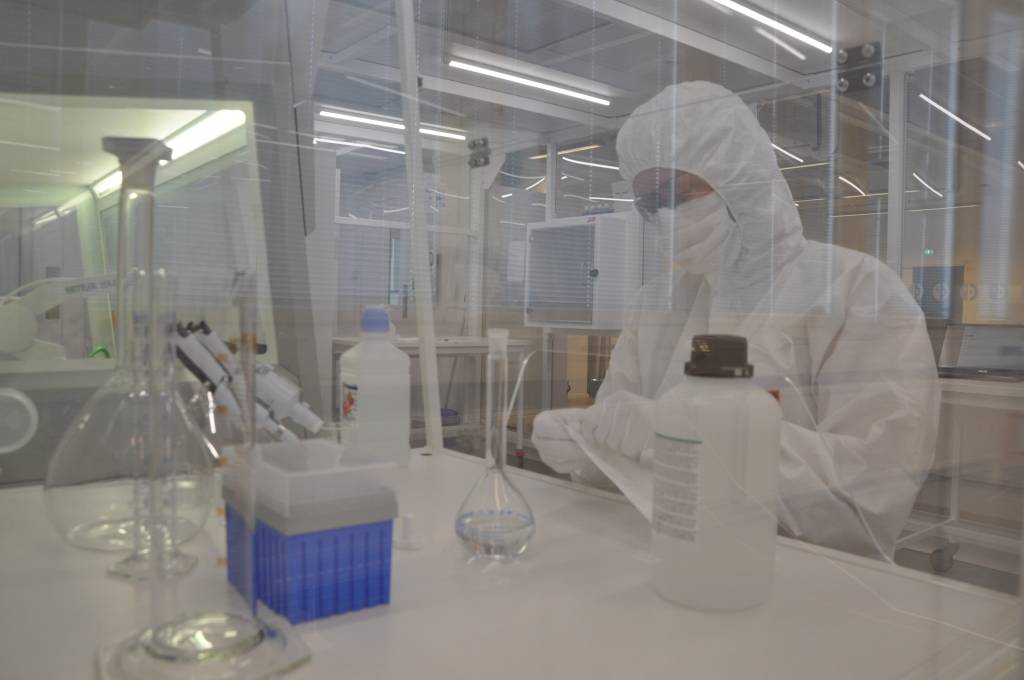
Their work, supported by orthopedic surgeon Professor Ilkka Kivimäki, eventually led to the creation of Askel Healthcare in 2017. Transitioning from academia to industry, Anne-Marie became the Chief Technology Officer of Askel Healthcare, where she applied her expertise in biomaterials to lead research and development efforts, including the development of the COPLA Cartilage implant.
“Academia is a different world, but some things are similar. As a researcher, you’re used to working independently with limited budget. In startups, it’s the same – you find funding and make things happen. So, in a way, it’s all project work”, Haaparanta reflects.
From animals to human healthcare
In its early years, Askel Healthcare focused on animal health, particularly cartilage repair for dogs and horses. Through projects partially also funded by Business Finland, the company treated cartilage defects, especially osteochondral defects in young dogs, in collaboration with University of Helsinki. The results showed that COPLA Cartilage implant helped to postpone the development osteoarthritis compared to traditional methods.
However, challenges in the animal healthcare market led the company to shift its focus to human healthcare for faster human market entry. The data gained from animal treatments could not be used as such for regulatory purposes towards human products, however, it gives good data to support the needed data for human use.
“Devices for animals are not regulated in many countries. For example, there are no clear regulations in the Europe for medical devices for animals. For some countries the medical devices for animals do not exist as such and therefore all devices for animals could be seen as drugs, meaning one would need to go through drug regulation to enter that market. The path was not straightforward, and it varied from country to country. As a small company, we decided to stop the animal care side and focus solely on the human side to reach the human market faster. As a small company you just must keep your focus”, Haaparanta describes.

Balancing innovation and regulation
The fundamental idea of the COPLA Cartilage implant is simple: a patient can walk with their biodegradable knee implant immediately after surgery. The mechanical loading on the operated site caused by walking helps simulate the formation of new cartilage tissue on the defect site. This is a game-changer in knee cartilage repair.
“Knee cartilage is the most common areas of cartilage damage, and it’s a huge problem for society. That’s why we started with the knee”, Haaparanta explains.
However, the path to bringing COPLA Cartilage implant to market is different from making proof-of-concept products in academic research.
“As a researcher [in academia], you know that what you are developing is not a final product. In the industry, you have to consider manufacturing requirements and regulatory standards from the start.”
Balancing innovation with the strict requirements for clinical trials and regulatory approvals can be challenging, but it’s essential for product development. Each product is unique and therefore has a unique path, and while innovation is encouraged, it must always remain within the framework of regulatory.
However, Haaparanta doesn’t review regulations as a limitation to innovation when compared to academia.
“Even in a highly regulated field, innovation is possible, but one must always ensure that the necessary regulatory criteria are met.”
Have a good team and courage to ask help
Haaparanta’s natural curiosity as a researcher and tendency to dive deeper into new topics have helped her quickly gain new knowledge. However, there is a limit to how deep one can delve into a topic in business.
“I used to feel quite anxious about new areas, as I often feel that I don’t know all the intricacies, but having discussions with other specialists who are more familiar with various fields of expertise is really important and helpful.”
During the transition from academia to business, Haaparanta gained a lot of collaborators from multiple fields. One of the biggest learnings for her was the importance of asking for help and realizing that many people genuinely and unconditionally want to provide advice.
“Don’t be afraid, even if you lack some knowledge. There are many people who can help you learn, and consultants are always willing to support you. As you build your network, you’ll find others with the skills you need. Also, remember to be part of the team and help newcomers along the way. Attend different events— you never know who you’ll meet or what opportunities may arise,” advices Haaparanta for those who are looking to transition from research to business.
The team
The team at Askel Healthcare consists of a diverse and talented group of professionals, with a strong focus on expertise in both the medical and scientific fields. While the core team is primarily Finnish, it also includes board members and collaborators from all over Europe and from the U.S.
“It is quite easy to go toward the same goal as we have a dynamic team dedicated to bring our product to the market”, states Anne-Marie Haaparanta.
Plan B and the biggest Askel moment
Starting a company always comes with risks. What was the plan B for Haaparanta personally, in the case company didn’t succeed?
“We had no plan B!” Haapanta laughs. “When you’re thrown into something, you deal with it as it comes. Of course, you need to have a plan B, C, etc. for many things within the company, because you always need to consider alternative solutions if things don’t go exactly as planned. But personally, Virpi and I are all in – we’re committed to this, and we’ll see it through to the bitter end”, She laughs again.
The biggest moment for Haaparanta’s career came in early 2023, with the first human operation where COPLA Cartilage implant was used.
“After so many years of development, we are finally treating patients and helping people. That’s the goal – to be able to perform these operations that improve people’s quality of life,” Haaparanta rejoices.
Askel Healthcare now looks to the future, aiming to bring their knee cartilage implant to global markets. “We want to make COPLA Cartilage implant widely available, cost-effective, and easy to access,” Haaparanta says. “This is just the beginning.”