

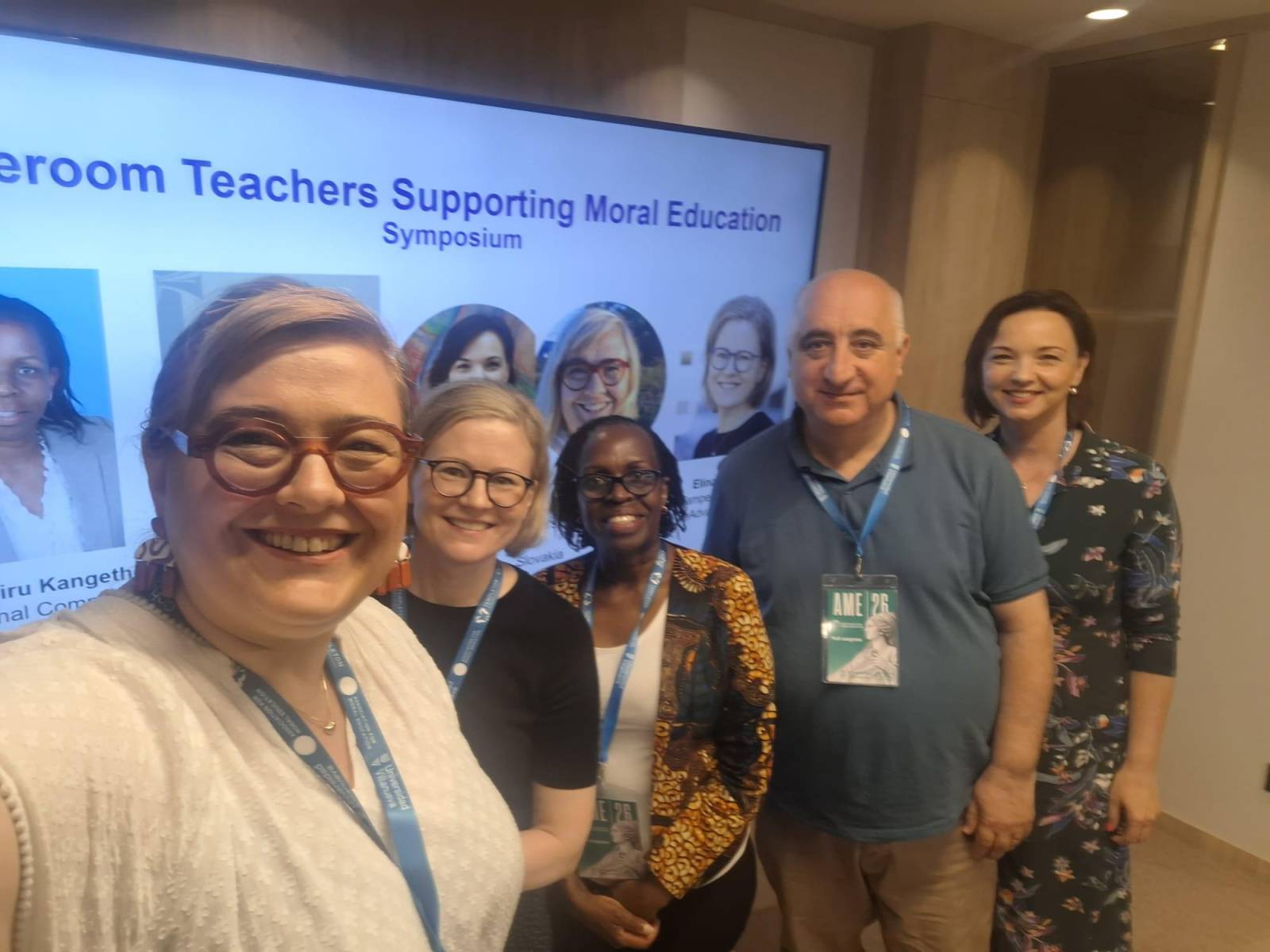
AME-konferessi kokosi noin 300 tutkijaa noin 40 eri maasta teemalla ”Re-Creating the Social Fabric in a Fragmented World: Education for Shared Responsibility”. Konferenssi järjestettiin Hotel RIU Plaza Españassa – niin tämä valtava hotelli kuin Madridin arkkitehtuuri ylipäätään huokuivat maan historiallista asemaa suurvaltana.
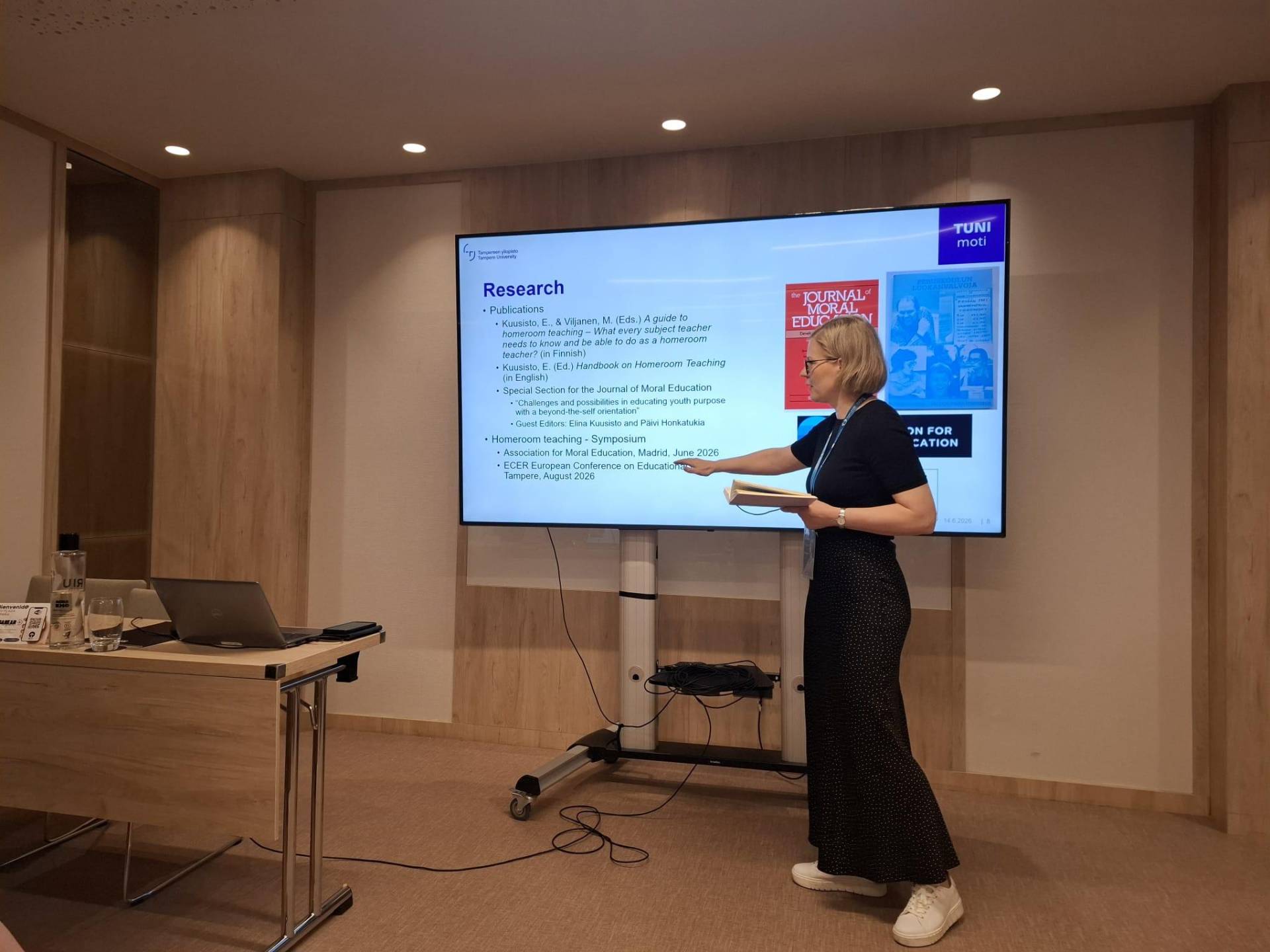
MOTIprojektia edusti konferenssissa Elina Kuusisto. Hän organisoi luokanohjauksta käsittelevän symposiumin, jossa kuulimme luokanohjauksen tilanteesta Keniassa, Armeniassa ja Slovakiassa. Elina toimi tilaisuuden puheenjohtajana ja diskussanttina.
”Homeroom Teaching Supporting Moral Education” -symposiumin anti
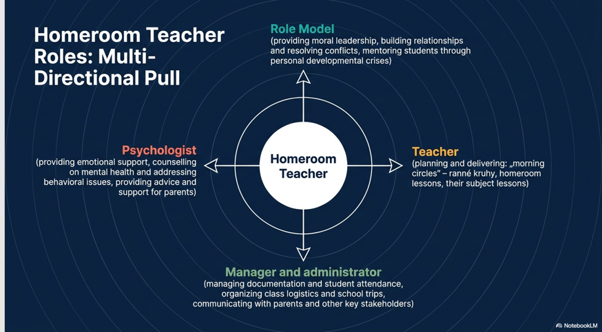
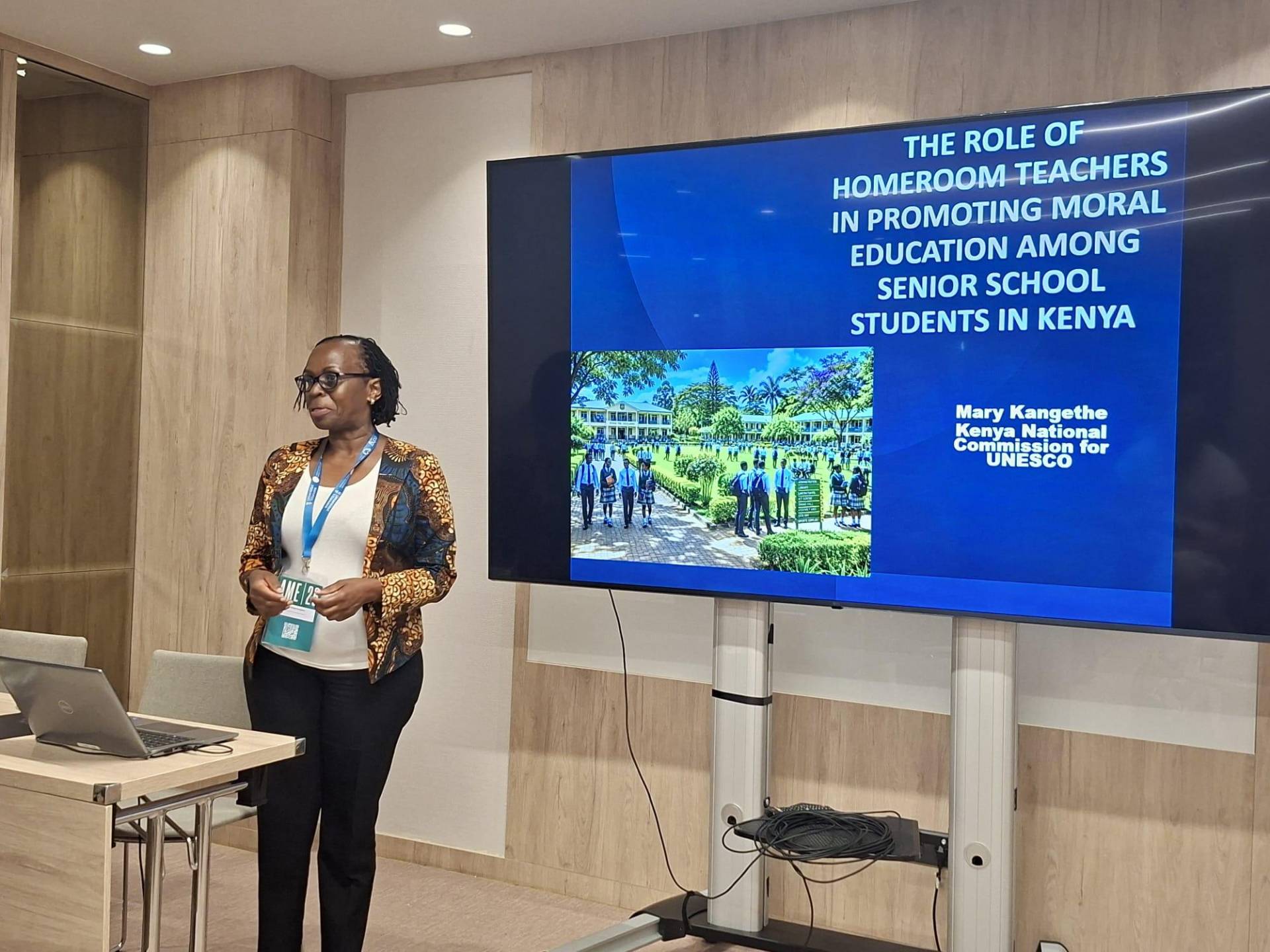
Esitelmissä kerrottiin luokanohjauksesta Kenian sisäoppilaitoksissa sekä Armenian ja Slovakian koulujärjestelmissä. Erityisesti Keniassa ja Armeniassa luokanohjaajien työtaakka näyttäytyi suurena: Keniassa oppilaita saattaa olla yhdellä luokalla 70. Armeniassa luokanohjaajien odotetaan vastaavan huoltajien yhteydenottoihin lähes ympäri vuorokauden, mikä tekee tehtävästä emotionaalisesti raskaan. Myös Slovakian esitelmässä tuotiin esille, miten luokanohjaaja on monenlaisten odotusten ristikentässä: moraalinen johtaja vs. hallinnollinen virkamies, opettaja vs. psykologi.
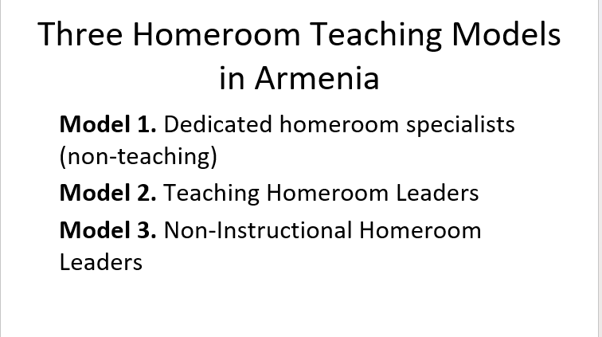
Luokanohjauksen organisoimisessa on paljon variaatiota. Esimerkiksi Armeniassa luokanohjaus voidaan järjestää kolmella eri tavalla:
1 Luokanohjaaja keskittyy vain luokanohjaukseen. Hän ei opeta muita aineita. Tyypillisesti luokanohjaaja on vastuussa 2-4 luokasta ja työskentelee päätoimisesti oppilaiden ja huoltajien kanssa. Tämä systeemi käytössä melko harvassa lukiossa.
2 Luokanohjaaja toimii opettajana. Opettaja hoitaa luokanohjaajan tehtäviä osana työtään. Usein suuri opetusvastuu rajoittaa mahdollisuuksia tehdä luokanohjaajan työtä. Tämä on tyypillisin malli Armeniassa.
3 Luokanohjaajana toimii opettaja, joka ei opeta luokkaa. Tässä mallissa luokanohjaajan vastuut ovat erillisiä oppilaiden akateemisten suoritusten arvioinnista. Tämä on harvinaisin luokanohjauksen malli Armeniassa.
Kokonaisuutena oli kiinnostavaa huomata, että kolmessa eri maassa, kolmelta eri mantereelta on samoja piirteitä luokanohjauksen toteutuksessa ja haastateissa. Kuten Suomessa, myös näissä maissa luokanohjaukselta puuttuu kansallinen normiohjaus ja opettajankoulutus.
Lopuksi symposiumin yleisö kertoi koskettavasti omisa ikimuistoisista luokanohjaajistaan, joilla on ollut valtava merkitys osallistujien elämänpolkuun. Osa kuulijoista pohti: Asetetaanko luokanohjaajille liikaa odotuksia? Tulisiko luokanohjaajan olla vain hallinnollinen virkamies? Millä edellytyksin luokanohjaaja voi olla (moraali)kasvattaja? Kysymykset ovat relevantteja MOTIprojektinkin kannalta – Miten luokanohjaaja, joka ei opeta ja tapaa oppilaita lainkaan voisi vastata oppilaiden kokonaisvaltaisesta kasvatuksesta?
AME 2026 Symposium
HOMEROOM TEACHERS SUPPORTING MORAL EDUCATION
Chair: Elina Kuusisto, Tampere Institute for Advanced Study, Finland
This symposium examines how homeroom teachers support moral education in three countries across three continents. Homeroom teaching is a stable feature of subject‑teacher educational systems worldwide. The homeroom teacher is responsible for the overall care of a class and its students, with emphasis on their moral, social, and behavioral development, as well as collaboration with parents. In some countries, homeroom teachers are described as “moral managers.” Despite the centrality of this role, research on homeroom teaching remains limited. This symposium offers international perspectives on the policies and practices that shape homeroom teaching and its role in supporting students’ moral education.
THE ROLE OF HOMEROOM TEACHERS IN PROMOTING MORAL EDUCATION AMONG SECONDARY SCHOOL STUDENTS IN KENYA
Mary Kangethe, Kenya National Commission for UNESCO, Kenya
This paper will examine homeroom teaching, as a critical platform for promoting moral education in Kenyan secondary schools. In view of the transition to Competency Based Education (CBE) which strongly emphasizes values-based education, the paper analyses the role of homeroom teachers in shaping learners’ character through role modelling, classroom culture, guidance and counselling, and school–home linkages towards holistic learner development. Drawing on Kenya’s historical and contemporary practices, the paper highlights the significance of homeroom teaching for learner wellbeing and character development, while identifying strengths and challenges. It underscores the need for strengthened teacher preparation, leadership support, and policy alignment to enhance moral education outcomes.
HOMEROOM TEACHERS AS PRIMARY CHANGE AGENTS IN ARMENIAN SCHOOL SYSTEM
Serob Khachatryan, Yerevan State University, Armenia
The paper will examine the pivotal role of the homeroom teacher in the Armenian school system. Different models of homeroom teachers in the Armenian school system will be presented. Grounded in a framework of the importance of holistic development concept, it will investigate how homeroom teachers function as essential mentors fostering school connectedness and resilience. The significance rests on redefining this role as central to early intervention and maintaining a positive school climate. Consequently, implications include the necessity for specialized training in counseling skills and dedicated instructional time to empower homeroom teachers as primary agents of student well-being.
HOMEROOM TEACHING IN SLOVAKIA: PROFESSIONAL ROLE AND CHALLENGES IN SCHOOL PRACTICE
Stefania Ferkova & Kristina Uhlikova, Comenius University Bratislava, Slovakia
Homeroom teaching is a specific component of the Slovak educational system, particularly at the primary school level. The study focuses on the duties, tasks, and professional role of homeroom teachers in Slovakia, with an emphasis on their educational functions. Attention is paid to the legislative framework, expectations placed on homeroom teachers, and their contribution to pupils’ personal and moral development. The paper also addresses current challenges related to workload, professional support, and teacher preparation. The findings highlight the need for systematic support and targeted professional development to enhance the effectiveness of homeroom teachers in contemporary school practice.
DISCUSSANT
Elina Kuusisto, Tampere Institute for Advanced Study, Finland
This talk compares the educational policies and practices of homeroom teaching in relation to moral education in the countries presented. The discussant will address the current strengths and challenges of homeroom teaching to inform discussion and guide future research.