

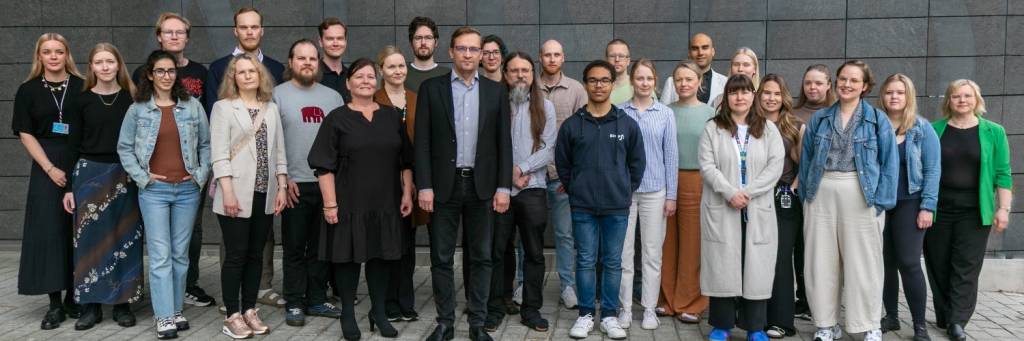
The Computational Biology Research Group, led by Professor Matti Nykter, uses computational and experimental approaches to study the molecular and cellular mechanisms of cancer. A central theme of our research is understanding how genomic and epigenetic alterations reshape gene regulatory networks and cellular states in cancer. We increasingly use single-cell and spatial multiomics to resolve these regulatory processes across cell populations and within the tumour microenvironment.
A major focus of our research is cancer evolution during disease progression and treatment. We investigate how tumours change over time, how different cancer cell populations emerge and expand, and how alterations in gene regulatory networks contribute to tumour progression and treatment resistance. By combining molecular measurements from tissue samples and longitudinal liquid biopsies, we can examine these processes across different stages of disease and treatment.
We also develop computational and experimental approaches for analysing circulating tumour DNA. Alongside their use for studying disease progression and treatment response, we investigate how these signals can enable sensitive cancer detection.
Our work combines statistical modelling, machine learning and computational method development with biological and clinical research. Through close collaboration with experimental researchers, clinicians and national and international partners, we aim to turn complex molecular measurements into mechanistic understanding and new opportunities for cancer detection and treatment.
Contact
Group leader: Professor Matti Nykter
Research group: Computational Biology, Tampere University