

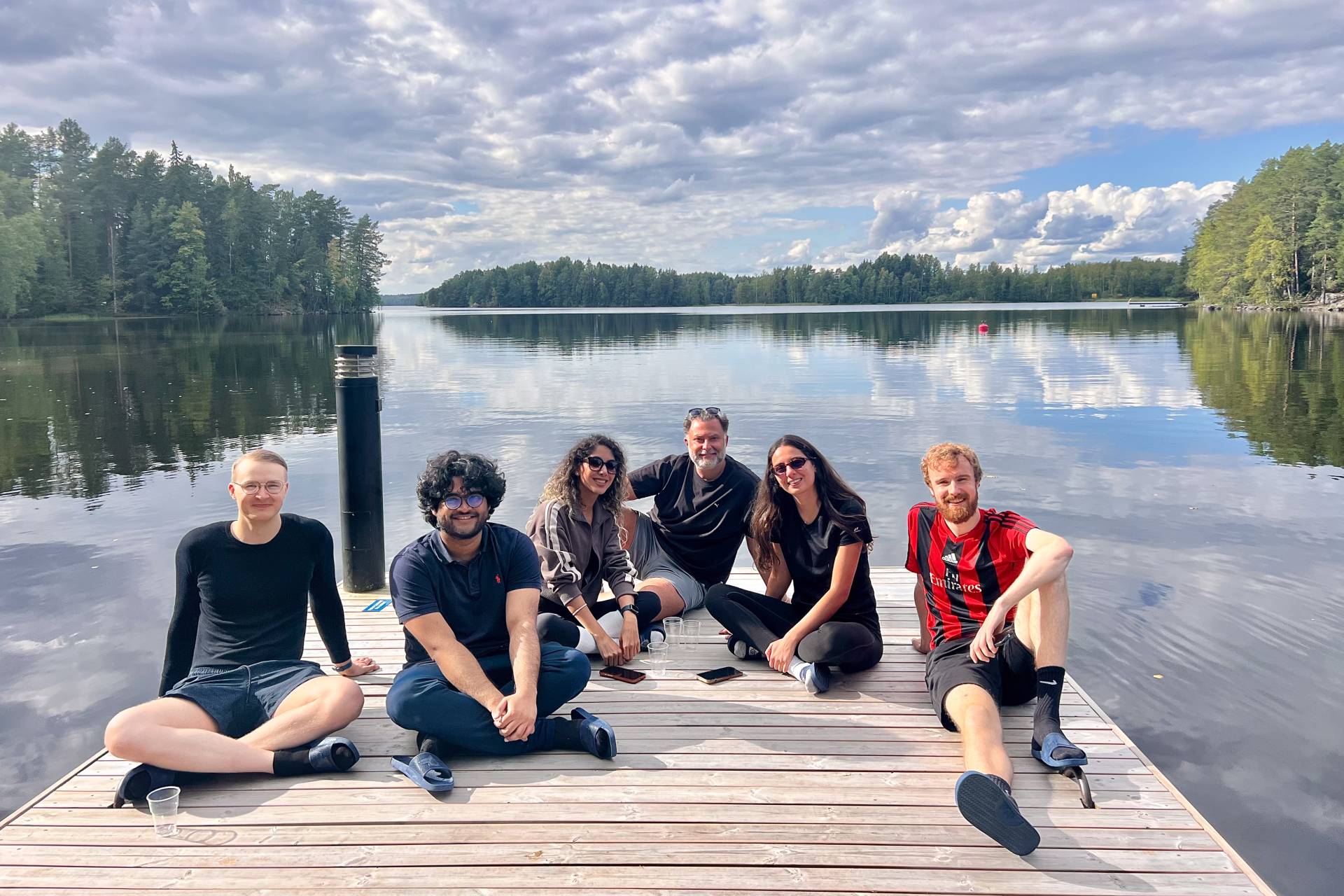
The Genomic Regulation for Precision Cancer Medicine Lab (GRPC) is dedicated to developing precision cancer medicine approaches that improve patient stratification, treatment selection, and therapeutic outcomes through the study of gene regulation, chromatin biology, and cancer evolution.
Led by Adjunct Professor of Molecular Medicine Alfonso Urbanucci, the GRPC operates across Tampere University, the Center for Cancer Eradication Research (CCER), in Finland, and in Norway, within diverse sections of the Oslo University Hospital, at the Institute for Cancer Research, and at the Department of Medical genetics, run in collaboration with Institute of Clinical Medicine at the University of Oslo.
Scientific Focus
The GRPC leverages single-cell and spatially resolved transcriptomic approaches to dissect tumour architecture and evolution, providing mechanistic insights that support patient stratification, biomarker discovery, and the identification of novel therapeutic vulnerabilities for precision cancer medicine. Moreover, central focus is the investigation of how alterations in chromatin dynamics, transcriptional regulation, epigenetic programs, and bromodomain-containing proteins drive carcinogenesis, tumour progression, metastasis, and treatment resistance. While prostate cancer represents the group’s principal disease model, the biological concepts, analytical frameworks, and precision oncology tools developed by the team are broadly applicable across multiple cancer types. The overarching goal is to translate molecular discoveries into clinically actionable biomarkers and therapeutic strategies.
A major pillar of the group’s research is the development of RNA- and transcriptome-based precision medicine approaches. By integrating genomic, transcriptomic, epigenomic and clinical data, the laboratory seeks to identify molecular stratifiers capable of predicting disease progression and treatment response, thereby supporting more personalised treatment decisions for cancer patients.
The group further leverages the unique resources of the FinnGen program, integrating nationwide genomic and health registry data with molecular profiling approaches to identify disease mechanisms, treatment-response biomarkers, genetic risk factors, and clinically actionable patient stratification strategies relevant to cancer and other complex diseases.
Recent Scientific Contributions
Recent high-impact publications exemplify the group’s translational research agenda. These include studies demonstrating that tumour transcriptome-wide expression classifiers can predict treatment sensitivity in advanced prostate cancer, the identification of molecular stratifiers associated with metastatic risk, and the discovery of epigenetic markers of endocrine resistance with associated therapeutic opportunities. The group has also advanced understanding of novel therapeutic approaches combining PSMA-targeted alpha-emitting radioligands or Xray radiation with epidrug.
Collectively, these studies support a shift from purely DNA-based approaches toward more comprehensive molecular profiling strategies that capture the biological state of tumours and improve precision treatment selection.
Collaborations and Position within the Cancer Research Ecosystem
The GRPC is an active component of the Center for Cancer Eradication Research (CCER) at Tampere University, contributing expertise in molecular oncology, precision medicine, and translational cancer research alongside complementary groups working in epidemiology, metabolism, abdominal cancers and clinical oncology.
Internationally, the group has scientific collaborations in Europe and United States with key leaders in the research field. Moreover, the laboratory maintains strong links between Finland and Norway through its dual presence at Tampere University, the Oslo University Hospital, and the Norwegian Centre for Molecular Biosciences and Medicine (EMBL partnership).
This structure enables access to large patient cohorts, clinical specimens, advanced molecular technologies, and multidisciplinary expertise spanning molecular biology, pathology, genomics, bioinformatics, radiation oncology and clinical cancer research.
Vision
The long-term vision of the GRPC is to accelerate the implementation of precision oncology, transforming molecular knowledge into clinically deployable biomarkers and therapeutic strategies. By integrating fundamental discoveries in gene regulation with patient-centred translational research, the group aims to improve risk stratification, overcome therapy resistance, and enable more effective and personalised treatments for cancer patients.
Contact Person
Alfonso Urbanucci
alfonso.urbanucci@tuni.fi