
Challenges in Implementing HiAP by Lauri Kokkinen
As part of the WHO Collaborating Centre at Tampere University Talk Series, this session featured Dr. Lauri Kokkinen, who examined key challenges in implementing Health in All Policies (HiAP).
The session addressed:
-
Institutional, political, and sectoral constraints on intersectoral governance
-
Strategies for strengthening collaboration across sectors
-
Practical insights for advancing health equity at the population level
About the speaker
Dr. Lauri Kokkinen is a senior researcher at the Tampere Institute for Advanced Study and Co-Director of the WHO Collaborating Centre at Tampere University. His research, grounded in an institutionalist perspective, focuses on the social determinants of health, the welfare state, and the labor market.
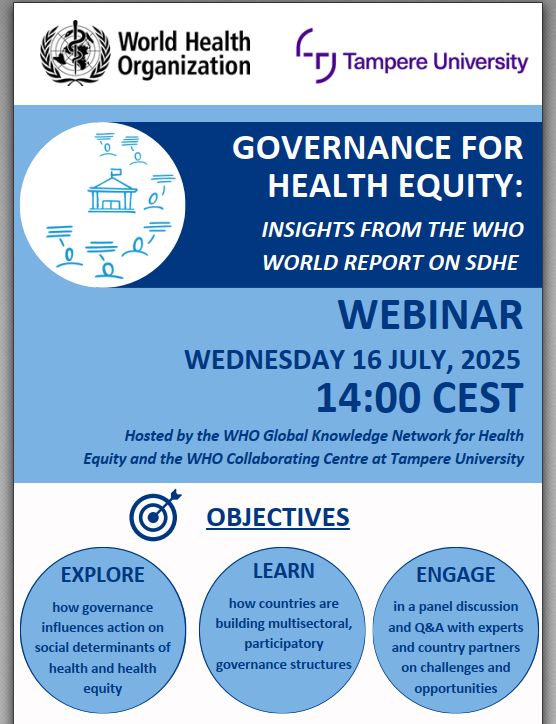
On July 16, 2025, our Center, in collaboration with the WHO Global Knowledge Network for Health Equity (GKNHE), hosted the webinar “Governance for Health Equity: Insights from the WHO World Report on SDHE.” The session focused on governance as a core theme of the WHO World Report on the Social Determinants of Health Equity (2025), highlighting how effective structures, participation, and policy coherence can be leveraged to reduce health inequities. The webinar featured expert contributions from Australia, Canada, Saudi Arabia, and the WHO, and brought together national and local decision-makers, civil society actors, academics, and practitioners for a panel discussion and interactive Q&A.
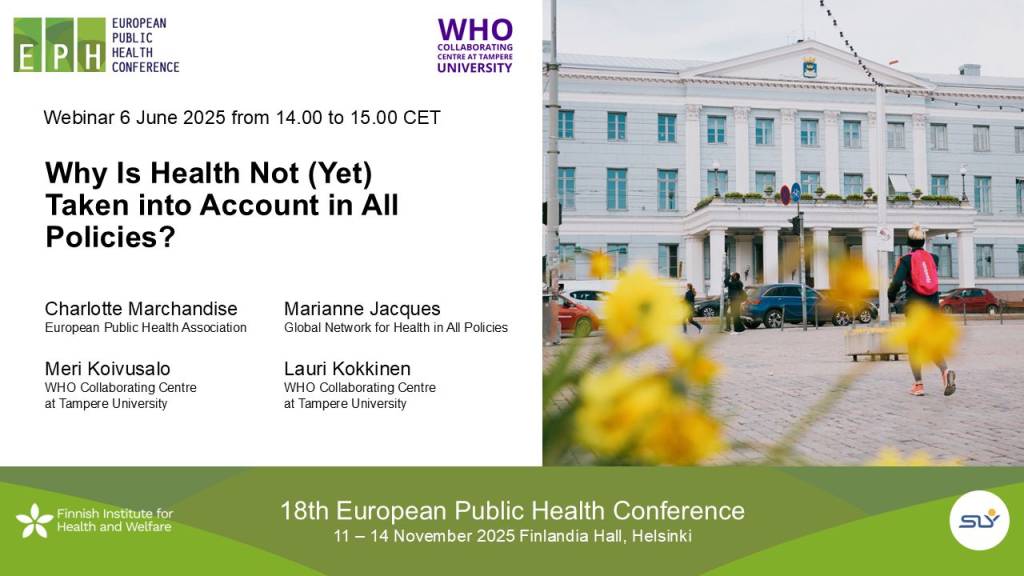
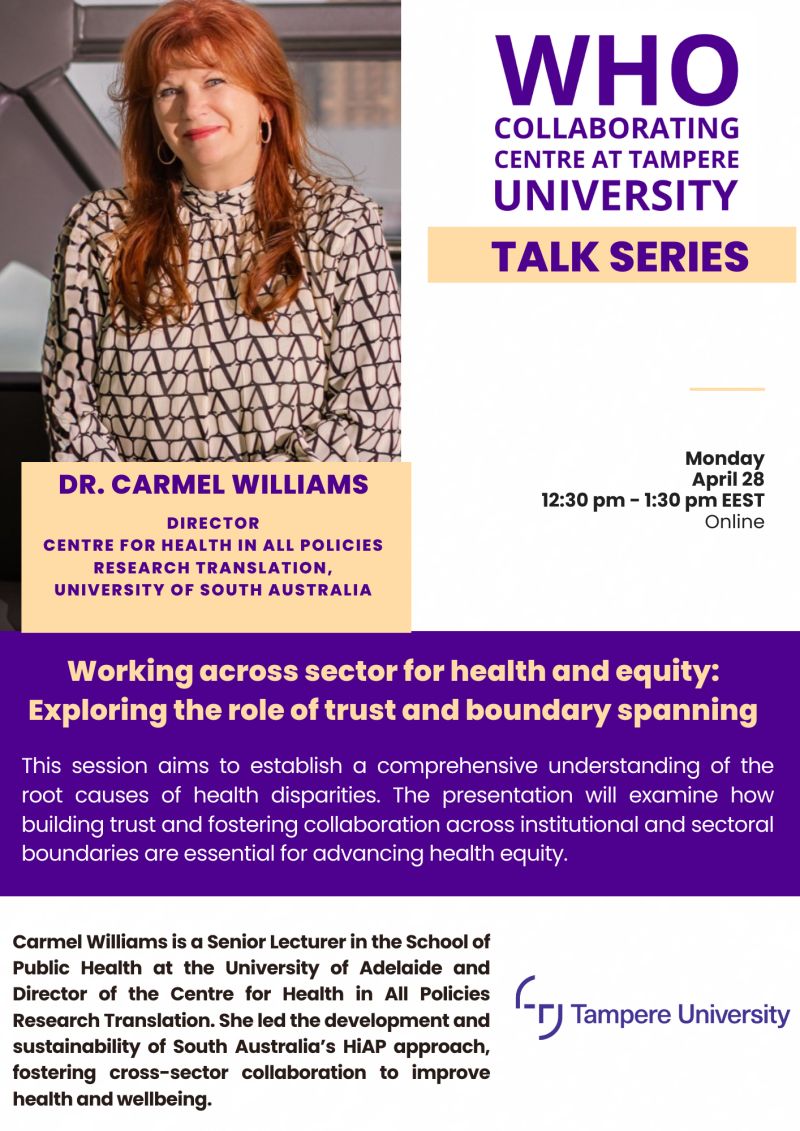
The session “What Does It Mean When We Say That Evidence Is Political?” explored the political dimensions of evidence use in policymaking, particularly in the context of health disparities. Led by Professor Paul Cairney, the talk addressed the persistent question, “Why do policymakers seem to ignore your evidence?” and unpacked how power dynamics, institutional frameworks, and competing interests shape policy outcomes. Emphasizing the role of cross-sectoral collaboration and health equity in decision-making, the session offered critical insights into how evidence can be more effectively integrated into policy processes to confront global health challenges.
“Social Class Alternatives for Population Health: Why They Matter?” with Dr. Carles Muntaner
The session, “Social Class Alternatives for Population Health: Why They Matter” examined how social class frameworks can inform more equitable health policies and systems. Dr. Carles Muntaner explored the root causes of health disparities and emphasized the importance of addressing structural determinants through cross-sectoral collaboration. Drawing on global health challenges, it highlighted the role of social class analysis in advancing health equity, reshaping policy, and supporting collective wellbeing.
 The Wellbeing Economy as an Approach to Promoting Health for All with Dr. Tuuli Hirvilammi

Unpacking Social Protection for Health Equity. Special WHO Session
A joint session with the WHO Global Knowledge Network for Health Equity (GKNHE), focused on the critical role of social protection in advancing health equity. The session explored how social protection measures can address systemic barriers to health by integrating policies and fostering cross-sector collaboration. Experts and country representatives shared strategies, case studies, and insights on leveraging social protection to improve health outcomes, culminating in a panel discussion and Q&A. For more information, please see here.
Passcode: bxXcc?U5
A joint session with the WHO Global Knowledge Network for Health Equity (GKNHE) focused on exploring the WHO Operational Framework for monitoring social determinants of health equity and utilizing data to inform policies aimed at improving health equity. The session delved into the framework’s key components and its practical application for effectively monitoring social determinants of health equity. Case studies from countries that have successfully implemented the framework were presented, highlighting its effectiveness in addressing health disparities. For more information, please see here.
 Introduction to Health in All Policies with Dr. Eeva Ollila (October, 2024)