In addition to producing and disseminating rigorous research across academic outlets and events, we collaborate with companies, cities, public agencies, and civil society to deliver decision‑relevant insights and co-resolve practical problems relating to circular economy and sustainability implementation.
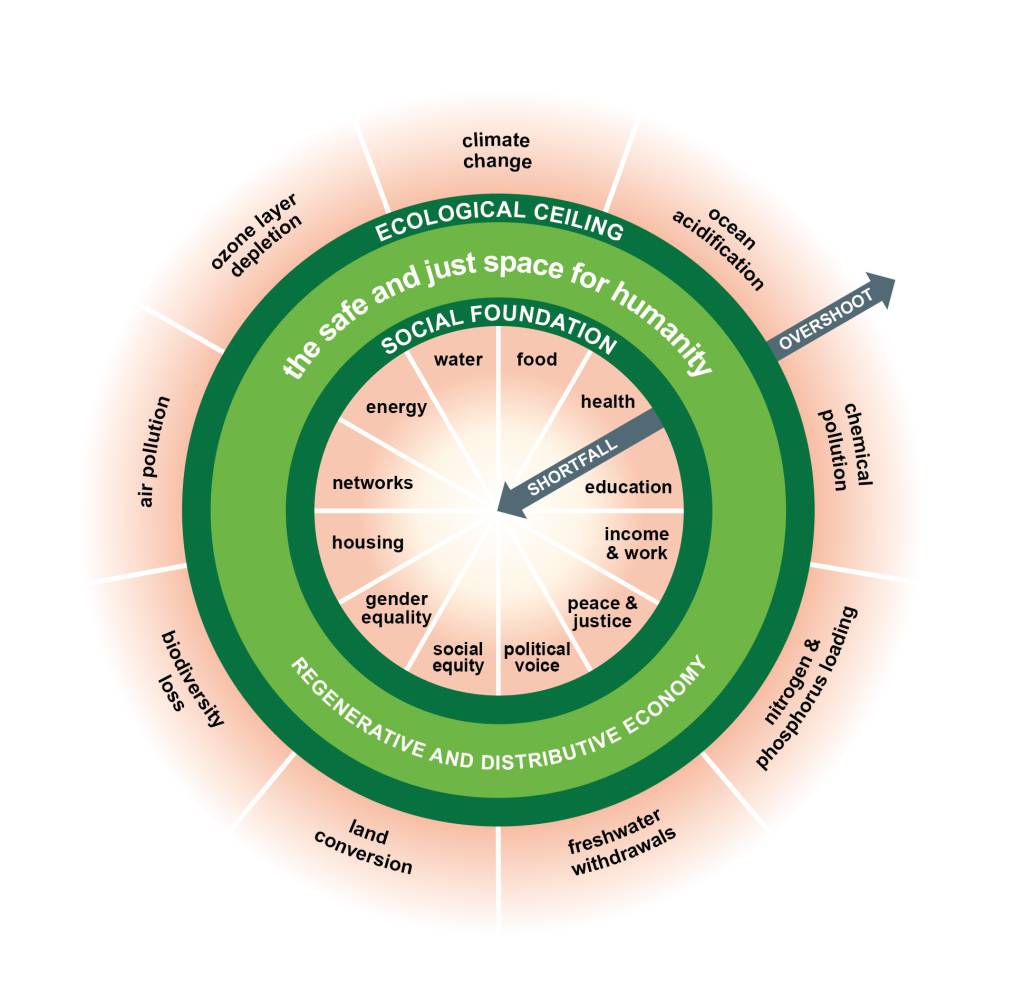
Doughnut Economy
ManCE is an interdisciplinary research centre dedicated to the management of the circular economy. As private and public interests in accelerating the green transition increase, this is where ManCE comes in, providing research based evidence and understanding as well as practical capabilities for relevant stakeholders.
Our mission is to help organizations move from linear to circular and sustainable business practices through research and co‑creation. We aim to contribute to mitigation of climate change and biodiversity loss and to achieving of the UN Sustainable Development Goals (SDGs).
Interdisciplinary expertise within ManCE on managing change towards circularity:
Circular business practices and business models
Circular supply chains
Circular economy ecosystems
Circular economy innovations, technological change, and technology foresight
Strategy for circularity (digitalization, organizational change, and business development)
Managing large‑scale circular projects and programmes
Circular economy in urban sustainability transitions
Profitability and value management in the green transition (measuring and managing ecological, social and economic value)
Stakeholder cooperation and engagement for the circular economy
Sustainable consumption and production
Sustainable marketing
Sustainable policy
Research Groups Associated with ManCE:
CMC
Cost Management Center (CMC) aims to improve the competitiveness and profitability of organizations using the means and tools of management accounting and financial analytics. CMC’s core competence lies in the field of management accounting and control, especially in analyzing costs, profits, and values.
CITER
Center for Innovation and Technology Research (CITER) specializes in research on innovation and technology. It’s research focuses on developing competitiveness in our focus areas: business and innovation ecosystems, modeling and forecasting of technological development, technology business (business models and commercialization), and technology strategy and innovation management. CITER’s special area of expertise is the business perspective in circular economy.
Wastebusters
The Wastebusters research group focuses on food waste and circular economy, for example, on the reduction of food waste, sustainable fashion, and plastics. The group investigates how different economic actors, such as consumers and consumer communities, businesses, and organizations, can contribute to solving key sustainability challenges, such as the growing amount of waste.
PONTE
Research group Politics of Nature and the Environment (PONTE) focuses on environmental policy in Administrative Studies in MAB Faculty. It aims to increase theoretical and empirical knowledge on the social essence of environmental issues and produce practical solutions to address specific environmental problems. The research is structured according to three focal and interrelated research areas: Environmental policy and governance, Politics of Nature, and Urban studies. These areas cover a broad spectrum of substantive topics including major challenges such as sustainability, urbanisation, circular economy, and climate crisis.
NOVI
The Information and Knowledge Management Unit focuses on knowledge-based value creation in a digitalising environment, where sustainability and circular economy ecosystems play a key role. It aims to provide understanding and expertise on the complex issues of knowledge-driven governance and effectiveness in the circular economy and its ecosystems. It aims to develop knowledge management and exploitation approaches that use knowledge to create value, improve resource efficiency, reduce environmental impacts and promote new business opportunities in circular economy ecosystems.
CROPS
Center for Research on Project and Service Business (CROPS) investigates value creation in organizations and inter-organizational relationships, particularly in project and service business. The emphasis is on the strategic phenomena that organizations face in their project and service business throughout the lifecycle of complex systems and during the renewal of organizations.
RESPMAN
Responsible Management Research Group (RESPMAN) conducts research on the relationships between business, society and nature from different perspectives, including responsible management, firm-stakeholder interaction, corporate responsibility and sustainable development. In addition to the research and teaching, it participates in societal discussions regarding corporate responsibilities and business ethics.