
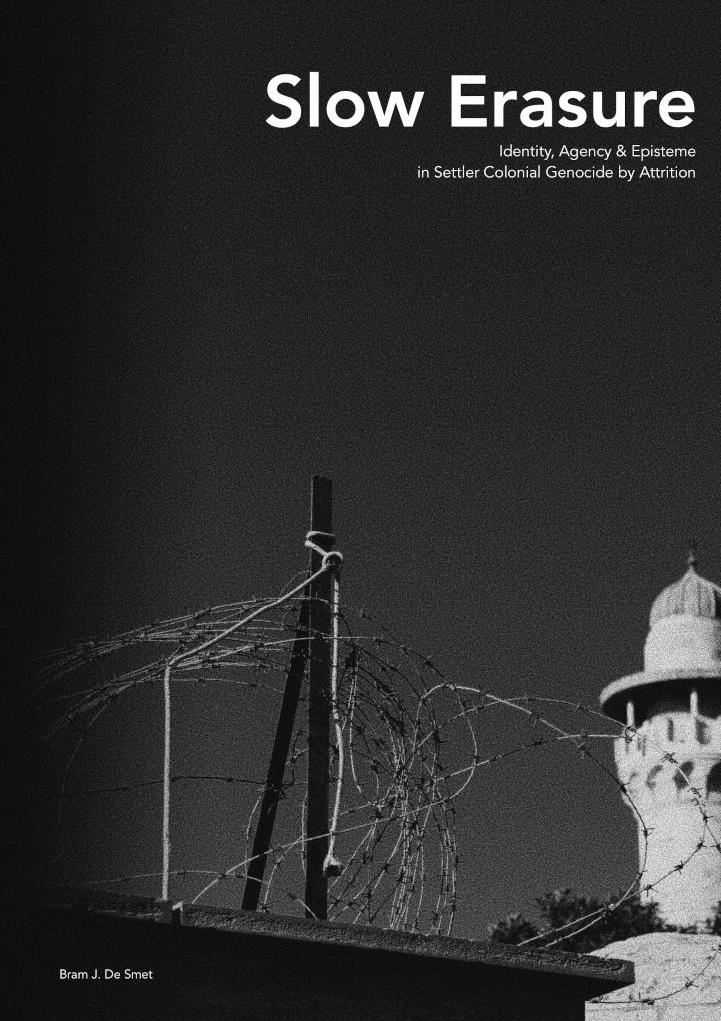
 On 19 January, Bram J De Smet successfully defended his PhD thesis, Slow Erasure: Identity, Agency & Episteme in Settler-Colonial Genocide by Attrition. The defence was examined by Dr Mark Griffiths, Reader at Newcastle University, United Kingdom, who served as opponent. The successful defence marks the culmination of a rigorous research project that makes a significant theoretical and empirical contribution to the fields of peace research, genocide studies, and decolonial thought.
The thesis introduces the concept of slow erasure to describe the layered, structural, and ongoing processes through which settler-colonial regimes seek to eliminate Indigenous identity, agency, and knowledge systems. Expanding on existing frameworks of genocide by attrition and cultural genocide, the concept captures the accumulative and often invisible forms of violence enacted through spatial control, epistemic suppression, bodily harm, and bureaucratic governance. Grounded in the case of Palestine, the research examines how Israeli settler-colonialism systematically undermines the conditions sustaining Palestinian presence, memory, and resistance — through policies of confinement, incarceration, surveillance, destruction of heritage, and the weaponisation of care and death. Crucially, the thesis also foregrounds Palestinian resistance through sumud (steadfastness), expressed in practices such as prison education, hunger strikes, land cultivation, and cultural preservation. Ultimately, the work argues that slow erasure serves as both a theoretical tool and a political intervention, calling on scholars and practitioners to attend to the quiet, systemic forms of violence threatening Indigenous communities — not only in Palestine but globally — and to expand the moral and political vocabulary needed for justice and liberation in settler-colonial worlds.
Link to the thesis: https://trepo.tuni.fi/handle/10024/232478?locale=len