HEX Centre for the History of Experience
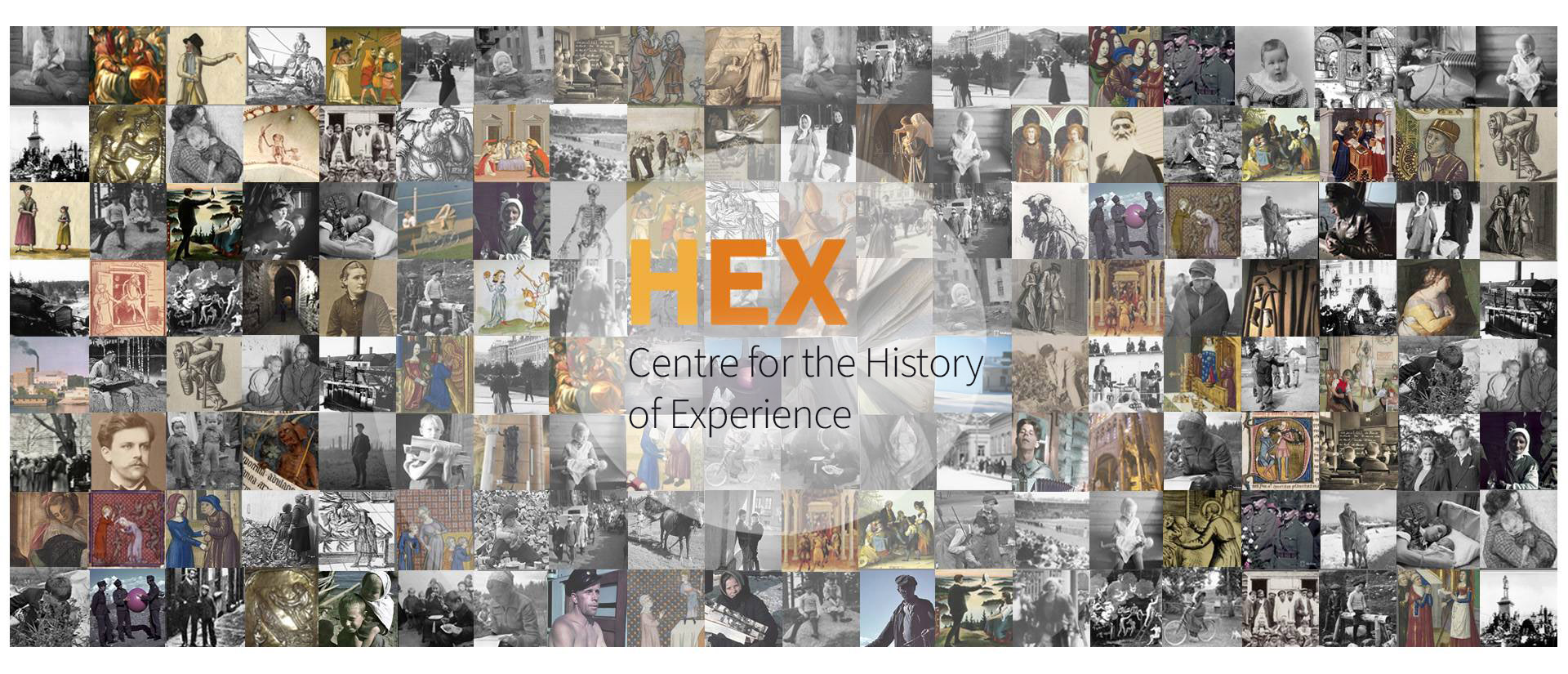
The research centre builds upon the research and international networks of the Academy of Finland’s Centre of Excellence in the History of Experience (HEX, 2018–2025). The key themes have been lived religion, lived nation and lived welfare state. Within these three main themes, the CoE has conceptualized the history of experience and established a strong international profile. A vibrant hub of international, interdisciplinary scholarship, the Research Centre will continue, develop, and renew the activities of the CoE.
As a growing and vibrant field of study, the history of experience seeks to understand the diverse roles and meanings of experience in history and historiography. The history of experience maps the dynamic interaction between individuals, communities, and society. In particular, it focuses on how the processes of sharing and reinforcing experiences affect social change and continuity. As a multifaceted cultural, social, and societal phenomenon, experience consists of everyday events in social reality, the meanings given to them, and the processes and structures that emerge as a result of the given meaning. The concept of experience combines micro and macro levels. The study of experience, therefore, does not limit itself to mapping the experiences of individuals but rather explores society from the perspective of experience.
HEX Research Centre continues to organize its annual conference, which has established itself as the leading international event in the field. The centre also organizes workshops and seminars with partners and publishes the Digital Handbook of the History of Experience (established in 2022) and the Palgrave Studies in the History of Experience series, originally published by the CoE. Furthermore, the centre brings together externally funded research projects that have scientific and societal impact.
The Research Centre supports and strengthens interdisciplinary cooperation. In addition to history, it involves researchers from literary studies, gender studies, art history, education, architecture, and sociology. The first director is Professor Pirjo Markkola and the deputy director is Professor Raisa Maria Toivo. Membership can be applied for by submitting a free-form written application, which will be evaluated by the steering group. The requirements are a master’s degree and ongoing research related to the history of experience or the concept of experience, as well as a connection to Tampere University.