
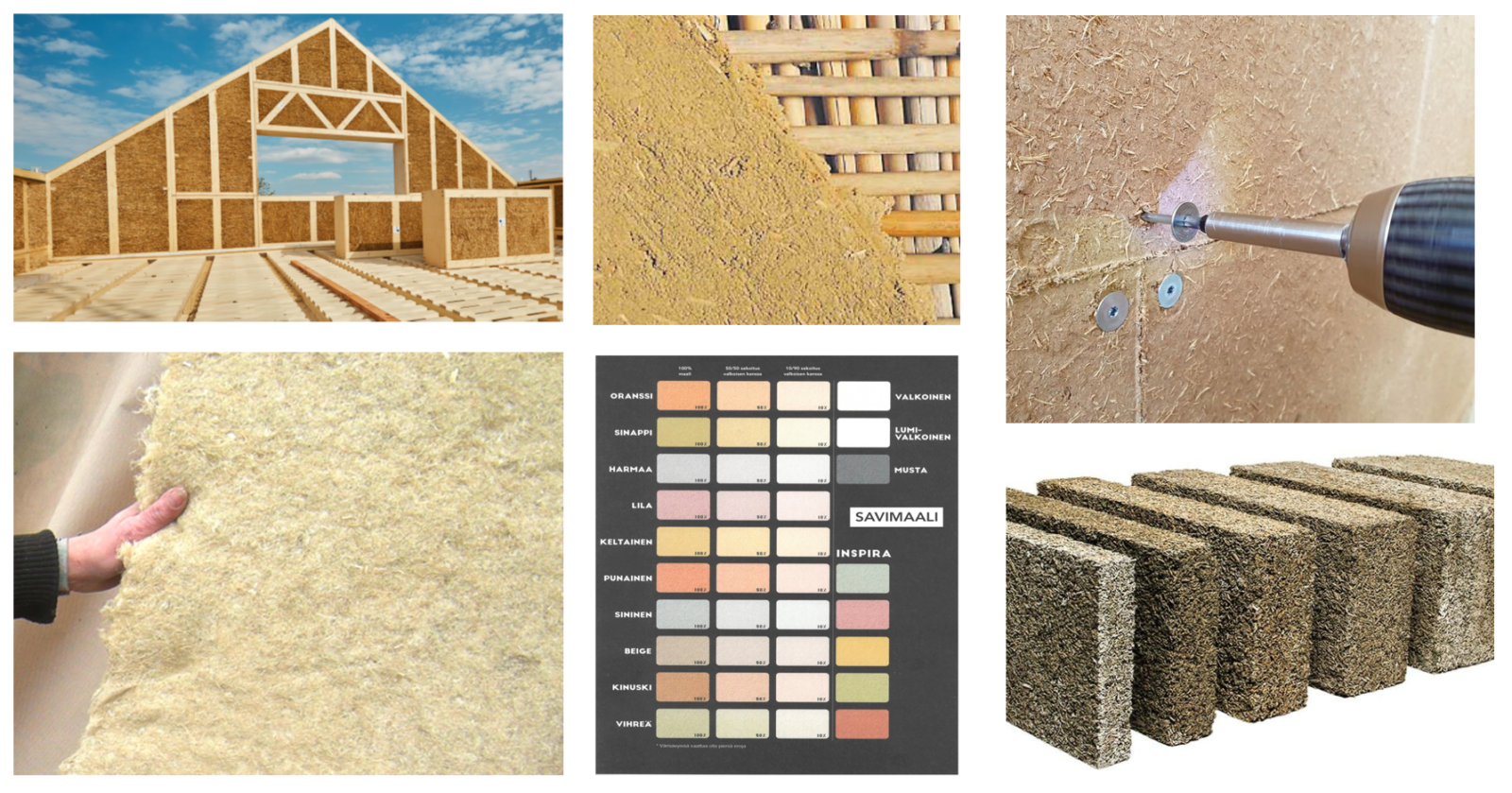
The greenhouse gases, land use and waste caused by the construction sector, as well as the consumption of raw materials, have a significant impact on both nature and the climate. According to Finland’s Ministry of the Environment, about 50% of the world’s natural resources and about 40% of unrefined energy are used in buildings and construction, and the construction sector produces about 35% of greenhouse gas emissions and 30% of waste globally. In terms of emissions, interest is increasingly focused on the low-carbon production of construction products as the energy consumption of buildings has decreased due to stricter thermal insulation requirements. In the future, construction products must also adapt to sustainable development so that future generations have the same or better opportunities to operate than current generations. Sustainable raw materials or building components are planned to be obtained from the recycling and reuse of building materials, but this alone is not yet able to meet the need to reduce emissions. Whether the raw material is recycled or virgin, the unsustainability of the most common stone and metal-based building materials is due to the high temperatures required to manufacture them. In industry, high temperatures have so far only been achieved with fossil fuels, but hydrogen may be an environmentally friendly alternative in the future if the electricity needed for production is produced using low carbon.
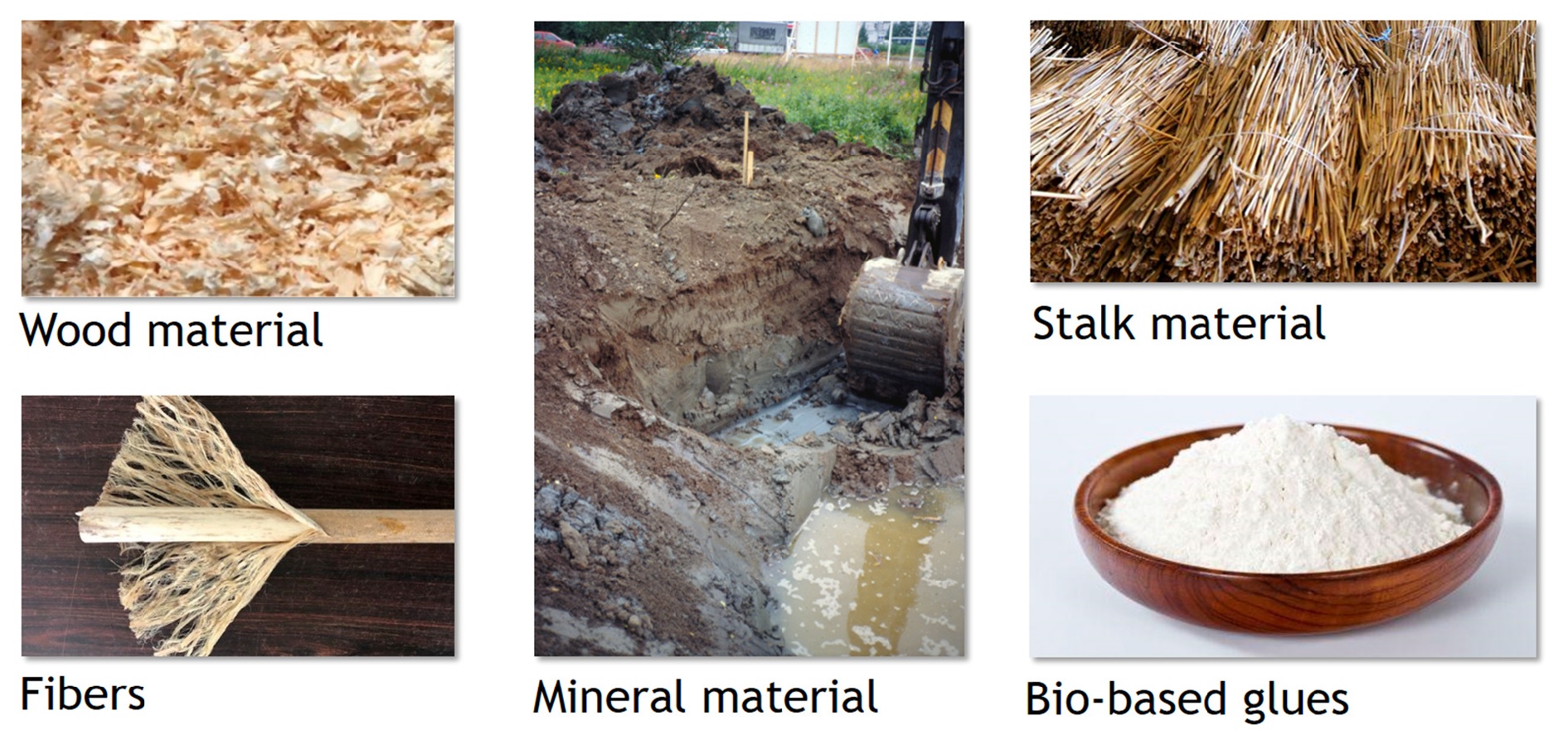
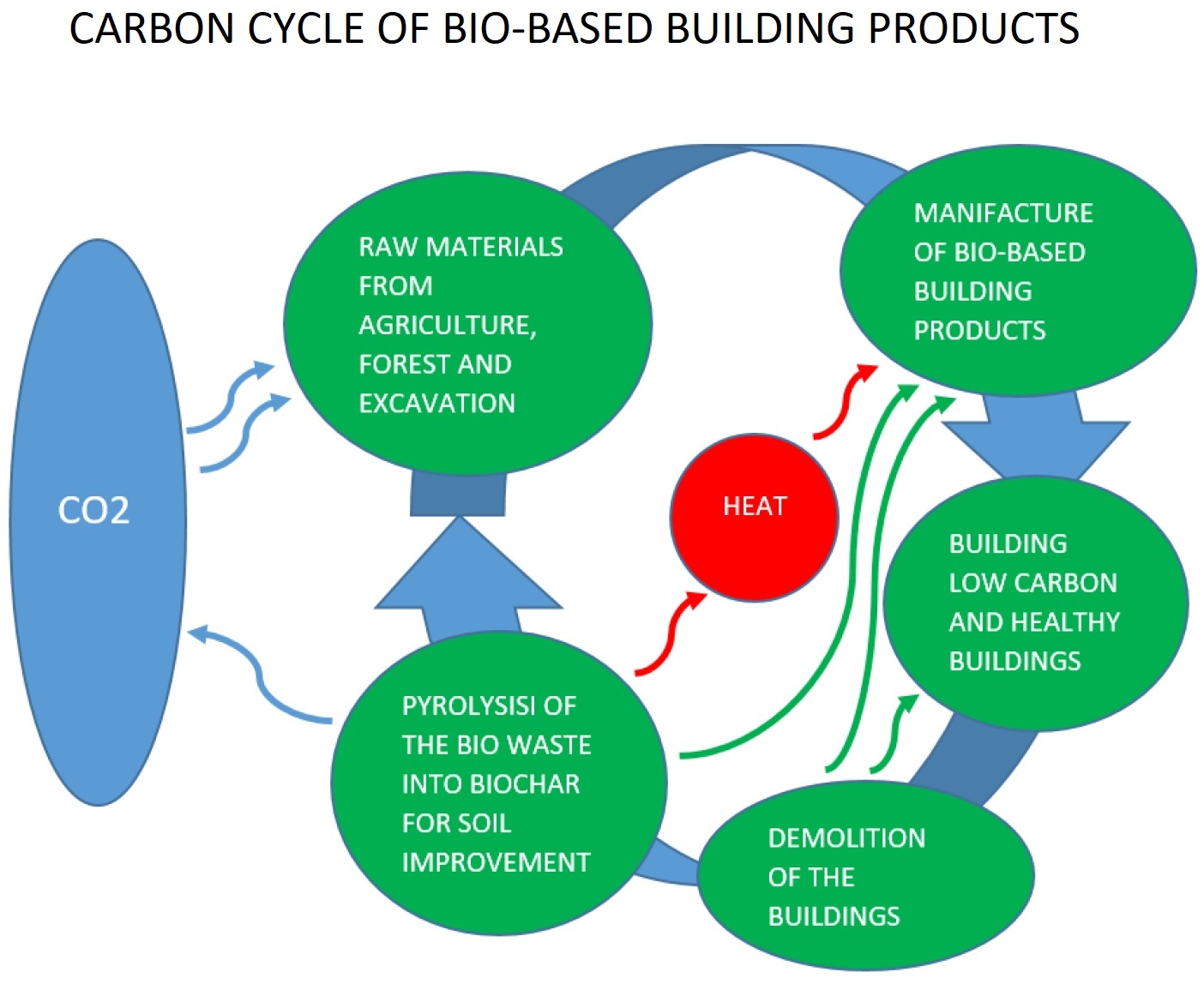
Natural construction products consisting of renewable and common natural raw materials and manufactured at low temperatures offer an interesting alternative in low-carbon construction. For example, wood-framed structures produce only a tenth of the carbon footprint of stone structures. According to a study carried out in the Nature CO2 project, when the mineral wool, plasterboard and vapour barrier plastics of conventional wood structures are replaced with other natural construction products, the carbon footprint of the structure can be further reduced by 10–15%. Construction products and structures containing a lot of organic raw materials will change from low-carbon to carbon-negative when carbon capture, for example as biochar, becomes the most likely treatment method for building demolition waste (ISO 14067 Article 6.3.8).
The Nature CO2 project revealed that the production and use of organic construction products is already well underway in Central Europe. They could therefore also be a realistic option in Finland and the other Nordic countries, but their functionality in terms of building physics in the northern climate, fire safety and effects on the healthiness of indoor air must be proven through research.
The ECOSAFE projects study the moisture performance of cutter chip insulation, and clay mixed with shavings was found to reduce the relative humidity of the exterior wall structure and thus reduce the risk of mould. Clay plaster, on the other hand, protected the partition wall insulated with cutter shavings so that it withstood the fire for more than an hour. Based on preliminary studies carried out in collaboration with Aalto University, clay also seems to have the ability to rehabilitate structures that have already been damaged by microbes, as good microbes thrive in the pores of clay, converting VOC gases into carbon dioxide, and clay absorbs odors.
The Stalk project focuses on structures consisting of straw elements with more than two floors. The construction of apartment buildings aims to achieve greater positive climate impacts. The project consists of four work packages:
- WP1 studies the moisture and thermal performance of straw elements in the northern climate and determines the best functioning interior and exterior surface solutions
- In cooperation with the South-Eastern Finland University of Applied Sciences, WP2 is developing a building board from common reed and bio-based binders such as starch. This could replace the porous wood fibre board on the outer surface of the straw element structure and at the same time promote the removal of nutrients from eutrophication waterways.
- WP3 is looking for the best composition for the clay plaster that protects the straw element from fire by mixing the clay’s poorly burning biochar and sheep’s wool. In addition to the Ecosafe project, the fire protection properties of clay plaster have been studied in several European projects, but the fire safety of structures containing a lot of biomaterial has become a bottleneck in apartment building construction in the Finnish fire code system. The fire safety of the structure in question will be demonstrated in the Stalk project with a fire simulation in accordance with the P0 procedure.
- In WP4, a training package will be prepared from the materials of the sustainable apartment building and the Nature CO2 project, which will be designed alongside the project. The training package includes information on the technical properties of the building system, building technology, prices, climate impacts and the health effects of indoor air. The presentation material will be used in various training events in the construction industry, and the material will be freely available online.
In the Biosivu project, the South-Eastern Finland University of Applied Sciences is looking for a use for the straw of oil hemp and aims to make it into a building board in the same way as the lake reed plate. Tampere University is studying the material properties of hemp board and developing a fire retardant product from shredded hemp and clay, which would be a dry version of clay plaster.
Homepage of the Stalk and Biosivu projects
Professor Juha Vinha (juha.vinha@tuni.fi) is the principal investigator of the projects, Eero Tuominen (eero.tuominen@tuni.fi) is the project manager of the Ecosafe project, and Mikael Westermarck (mikael.westermarck@tuni.fi) is the project manager of the Stalk, Biosivu and Nature CO2 projects.