Researchers
Learn more about our researchers and their research topics!

Tampere Accessibility Unit

Learn more about our researchers and their research topics!

markku.turunen@tuni.fi
maija.hirvonen@tuni.fi
The Horizon Europe Research and Innovation Action aims to improve the accessibility and inclusion of the world of work and promote the rights and equality of people with disabilities adhering to the principle of ‘nothing about us without us’. The project brings together expertise in the social sciences, humanities and engineering with the common goal to contribute to a more inclusive future of work.
NewWorkTech addresses the need to break down accessibility barriers in the labour market that affects one fourth of Europeans who have a disability (101 million people), and will shed light on innovative and responsible uses of emergent technologies in this context.
(Jane and Aatos Erkko Foundation, 2022–2023, PI: Annamaria Mesaros/audio signal processing).
The project develops a novel approach to machine learning to automatically produce linguistic descriptions of everyday acoustic environments. The general aim is to increase the understanding of how people (sighted and blind) interpret the world through sound and to teach intelligent machines to simulate it.
johanna.virkki@tuni.fi
liisa.mustanoja@tuni.fi
(Koneen Säätiö, 2024–2027)
Kielellinen affekti, syrjimätön kieli ja tutkimukseen osallistumisen saavutettavuus
Tampere in Emotions is a project in which Finnish-language researchers investigate linguistic affect, bias-free language, and access to participation in research. The project aims to 1) produce knowledge about linguistic affect and bias-free language in Finnish, 2) promote the use of bias-free language in Finnish, and 3) increase the access to participation in research by reducing cognitive and sensory barriers. The project consists of three parts. The first part examines group-based hierarchies that underlie biased language. The second part investigates the connection between affective meanings and bias-free language. The third part explores the language-related experiences of adults with visual impairments in Tampere region. The parts of the project are connected by the idea of Tampere as the heart of research. The researchers and stakeholders are based in Tampere and data are collected from Tampere region. Collaboration between researchers with and without disabilities and co-research with study participants are highlighted in this project.
tuuli.keskinen@tuni.fi
(Jenny and Antti Wihuri Foundation, 2021-2022)
Studying the digital inclusion in the Finnish society among adults with a hearing impairment, physical disability, or visual impairment. The research also investigates practical challenges and possibilities related to digital accessibility. The study is based on large questionnaire data (65 questions in total) collected from the target group representatives (n=282). The results bring concreteness to societal discussion and enable addressing the problems by decision-makers and service providers, among others.
anne.ketola@tuni.fi
(Post-doctoral researcher in the Graphic Justice research project, Academy of Finland, 2020–2024, PI Eliisa Pitkäsalo)
Official documents can often be difficult for clients to understand, due overly complicated language, unfamiliar terms, etc. Misunderstandings can impede people from accessing their social rights. The project examines how the comprehensibility of different types of legal documents – such as contracts or administrative documents – could be improved by intersemiotically translating verbal-only documents into comics.
pauliina.baltzar@tuni.fi
betta.saari@tuni.fi
The role of interaction and language use in the construction of audio described visual art museum experiences of visually impaired people. Contrastive study: Finland-Germany
The project studies how social interaction and language use construct visual art museum experiences of visually impaired people on audio described and guided art museum tours. The project increases knowledge about the collaborative construction of a visual art experience of visually impaired people through social interaction. Additionally, the project aims to define differences and similarities in social and lingual practices in audio described visual art museum tours in Finland and Germany.
biju.thankachan@tuni.fi
The popularity of smart speakers such as Amazon Alexa and Google Home are on the rise across the globe. Previous studies have revealed that these devices are proving to be a boon for the users, helping them in many ways – reminding them to take medicines, accessing information in a natural way, helping with cooking and so on. My research focuses on how these devices can be utilized in semi-public spaces such as libraries, community centers, health centers by the elderly population. Can these devices be an accessibility tool for different purposes for the target users? What are the challenges of having such devices in semi-public spaces? What are the concerns that inhibit the use of such devices in semi-public spaces?
This research aims to qualitatively understand the user experience of elderly people with the use of smart speakers in semi-public spaces. The probable outcome of this research would throw light on how smart speakers could act as an accessibility tool for the elderly.
frederike.schierl@tuni.fi
Reception study on human-translated and machine-translated subtitles. Interest in how people react to the different kinds of translation and how this can be used to foster easy accessibility to information.
The project investigates response (lisibility), reaction (readability), and repercussion (viewer’s preferences and habits) of machine-translated and human-translated subtitles in Finnish and German. Living in a world of constant movement and migration means also adapting to foreigner’s needs regarding language and communication, therefore, to guarantee accessibility and social participation. Machine translation has proven to be an aid, but still lacks in quality, especially compared to human translation, which is still considered as the gold standard. However, time is money and so, there is growing interest in fostering machine translation suitability for subtitling.
The aim of the project is to gain a deeper insight into consumer’s use (interaction) with different sets of subtitles and hence whether there will be differences in attention allocation, comprehension, and attitude.
mirkka.forssell@tuni.fi
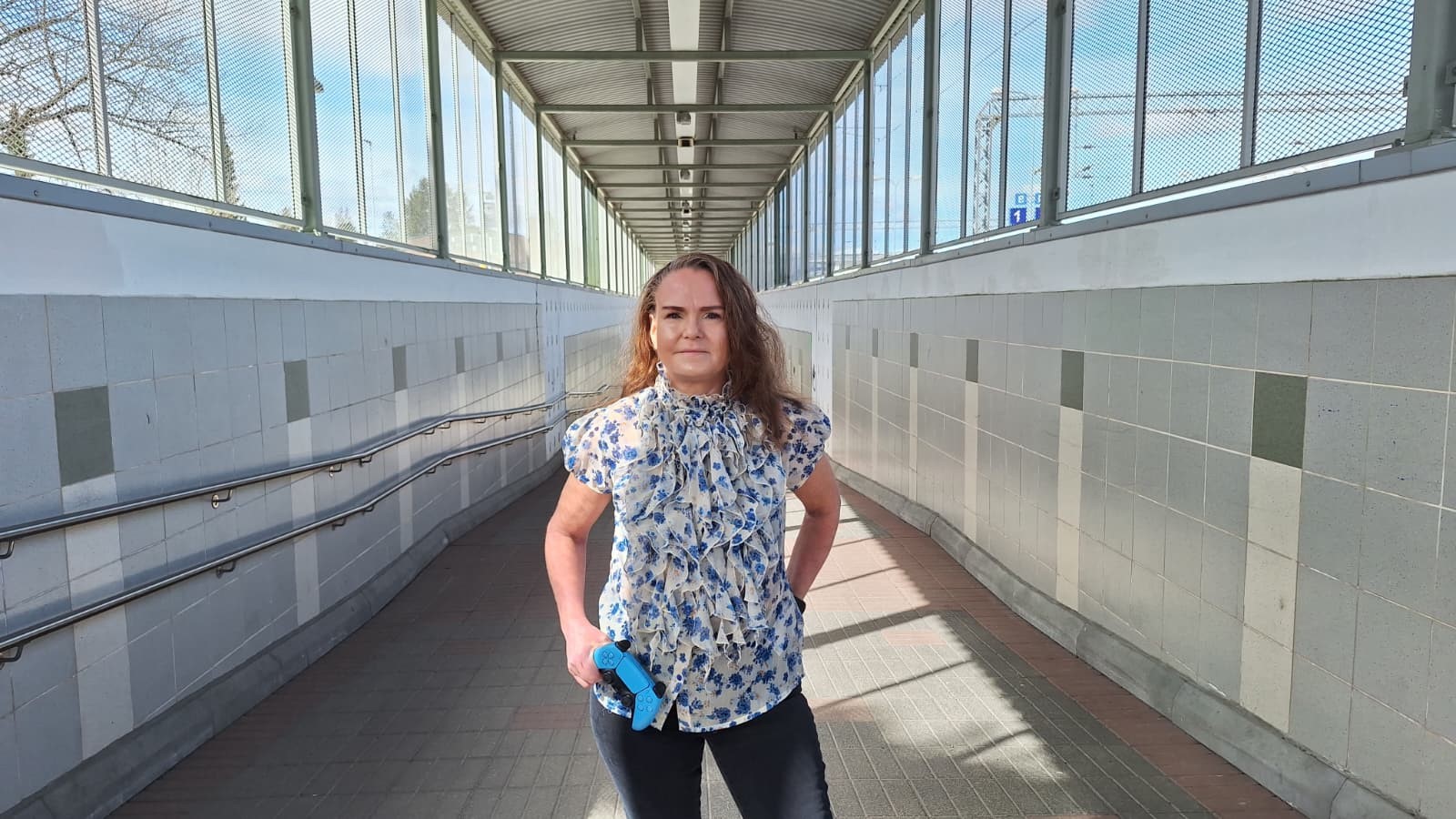
The research focuses on accessibility, inclusive and flexible pedagogical approaches, and technology-enhanced learning in higher education. A particular interest lies in how pedagogical practices, learning environments, and technologies can support learning, address diverse learner needs, and provide accessible and flexible opportunities for participation and learning.
Current research includes pedagogical development and research related to Management Studies in Medical and Dental Specialist Training. Research interests include accessibility in education, digital learning, artificial intelligence in learning and education, virtual reality, immersive and simulation-based learning, and scenario-based learning. The research also explores the development of pedagogical practices and learning environments that support professionals combining studies with working life.
Research interests also include older adults, accessibility, digital inclusion, game-based learning, and well-being. The doctoral research examined older adults’ experiences of mobile, virtual reality, and traditional card games, with particular attention to accessibility, participation, social interaction, and well-being. The research is connected by a broader interest in accessibility, inclusive pedagogy, technology-enhanced learning, and lifelong learning across diverse learner groups.

helmi.marttila@tuni.fi
[Means of meeting the subtitling obligations: Intralingual subtitling and its processes produced by paraprofessional subtitlers using automated tools]
Since a change in legislation in 2019, it is now mandatory for governmental and other public organizations to add intralingual subtitles on videos published on their websites. This has created a new group of paraprofessional subtitlers, who produce subtitles as part of their job, though it is not included in their original field of profession. The ongoing PhD research studies what actions have Finnish organizations affected by the legislation taken to meet the obligations, how the new paraprofessional subtitlers view their work, how they use automated tools, and what the produced subtitles are like from a linguistic perspective.